AI SEO Tools Scale Agile Solutions: The Small-Team Playbook Nobody’s Written Yet

Ever wonder if “agile SEO” is a term built for 50-person marketing teams with a Jira board the size of a football field?
You’d be right to wonder. Most guides on AI SEO tools scale agile solutions talk about SAFe frameworks, cross-functional squads, and governance boards. Great if you’re running SEO for a Fortune 500 company. Not so great if you’re a solo affiliate marketer, a two-person content team, or a small business owner working with a fraction of that budget.
Here’s the good news: the core idea behind AI SEO software scale agile solutions works exactly the same at small scale — and honestly, it can work faster, because you don’t need three people to approve a title tag change. You just need the right tools and the right system.
Let’s build that system together.
Quick Answer: What Does This Actually Mean?
AI SEO tools scale agile solutions by combining AI-powered automation — keyword research, content scoring, technical audits — with short, iterative Agile sprints. Instead of a quarterly content calendar, you work in focused two-week cycles: research, publish, measure, adjust. For a solo marketer or a small team, this means faster feedback, fewer wasted efforts, and a way to compete with teams that have ten times your headcount.
That’s the whole idea in one paragraph. Everything below is the “how.”
Table of Contents
Why Most Guides on This Topic Get It Wrong
Most enterprise guides walk you through SAFe, Scrum ceremonies, governance layers, and multi-team coordination. Those systems solve coordination problems at scale. But if you’re a freelancer or a small business, you don’t have those problems to begin with.
What you actually need is simpler: take the Agile ideas that matter — short iterations, constant improvement, fast feedback — and skip the enterprise complexity that was built for a completely different business model.
That’s what this guide does. Same Agile concepts, sized down to what one marketer or a small team can run this week.
What AI SEO Tools Scale Agile Solutions Really Means
Strip away the business jargon, and two ideas are working together here.
AI SEO tools automate the repetitive, data-heavy work – keyword research, content scoring, technical audits – so you’re not doing everything by hand.
Agile means working in short, focused sprints, reviewing what worked, and adjusting quickly instead of waiting months to find out if a strategy paid off.
Put them together, and a solo marketer (or a two-person team) can move at a speed that used to require a much bigger crew.
Why This Isn’t Just an Enterprise Thing
Who adapts faster — a company that needs twelve approvals, or you?
That’s the part most articles skip. Scaling doesn’t have to mean scaling up. Sometimes it means using what you already have more efficiently. A small-team agile AI SEO system means:
- You can test an idea, measure it, and pivot in two weeks — not two quarters.
- You can run a structured process without a dedicated SEO department.
- AI tools cover the “extra headcount” that isn’t in your budget.
This isn’t about building a bigger team. It’s about producing more with the one you’ve got — and simplifying the process along the way.
Enterprise Agile vs. Small Business Agile
Side by side, the difference is obvious:
| Enterprise Agile | Small Business Agile | |
| Team size | Cross-functional squads, SEO CoE | 1–3 people |
| Approval chain | Multiple stakeholders, governance boards | You decide, you ship |
| Sprint focus | Coordination across business units | Content, keywords, technical fixes |
| Tooling | Enterprise platforms (BrightEdge, Semrush Enterprise) | Budget-friendly stack (Frase, KeySearch, LowFruits) |
| Speed to test an idea | Weeks to months | Days |
Notice what’s missing from the small-business column? Bureaucracy. That’s the advantage.
The AI SEO Tool Stack That Actually Fits Your Budget
You don’t need every tool on the market. You just need the right one for where you are right now.
Whether you call it AI SEO software scale agile solutions, or SEO AI software scale agile solutions, the goal doesn’t change: match your tools to your stage, not your ambitions.
Just Starting (Free Tools)
At this stage, your wallet stays closed. And that’s fine — these tools do more than enough:
- Google Search Console — your free, honest source of what’s actually driving clicks.
- Google Keyword Planner — basic search volume data, no cost attached.
- AnswerThePublic (free tier) — question-based keyword ideas straight from real searches.
- ChatGPT, Claude, or Gemini (free versions) — great for brainstorming, outlines, and spotting content gaps.
- Google Analytics 4 — free traffic and behavior data once your content goes live.
- Screaming Frog (free, up to 500 URLs) — a solid starting point for technical audits.
Think of this stage like learning to cook with what’s already in your kitchen. You don’t need a fancy stand mixer yet. You need to know if the stove even works.
Growing ($20–$50/Month)
Once you’ve got some traction, a small budget goes a long way:
- KeySearch — affordable keyword research with a built-in competition score, so you know what’s actually winnable before you write a single word.
- Frase.io — AI content briefs and on-page scoring at a fraction of enterprise pricing. We compared it head-to-head in our Frase.io vs. Surfer SEO review.
- LowFruits — finds low-competition keyword opportunities fast, so you’re not burning hours digging through SERPs by hand.
Scaling Up (When Revenue Justifies It)
This is where most creators overspend. Don’t. Add these only once your content library is big enough to need them:
- SE Ranking – an all-in-one alternative to Semrush or Ahrefs, with plans built for real small-business budgets. It handles rank tracking, competitor research, and technical audits in one dashboard — and it’s one of the few tools that also tracks visibility inside Google’s AI Mode results, which matters more every month. It’s also built for SEO + GEO with repeatable delivery, so marketing teams aren’t rebuilding their workflow from scratch on every project. And if you’re managing multiple clients, its automation and collaboration features make multi-client SEO + GEO work a lot easier to keep organized.
- Surfer SEO or Clearscope — advanced content scoring once you’re publishing at real volume.
- RankMath Pro — technical SEO automation built right into WordPress.
Skip the heavier backlink and competitor tools at the “just starting” stage. They’re not where your time — or your money — is best spent yet.
Bottom line: Start at your tier. Move up only when your current tools stop being enough. Not before.
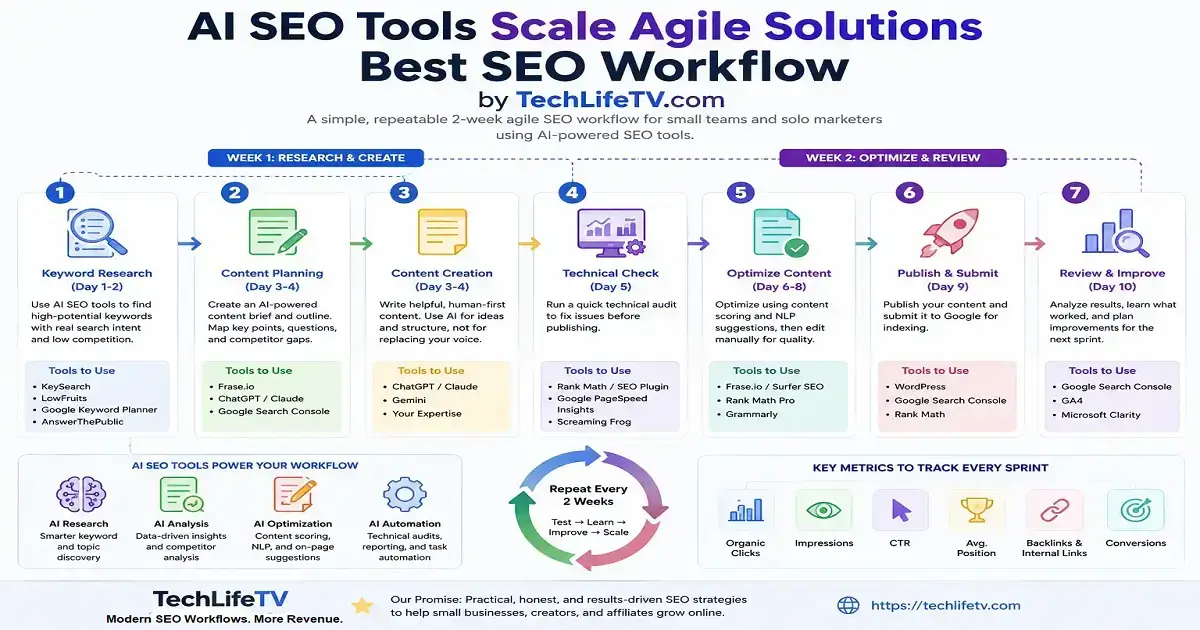
Simple 2-Week Sprint by TechLifeTv.com
Many guides neglect this part: the real system you can copy this week.
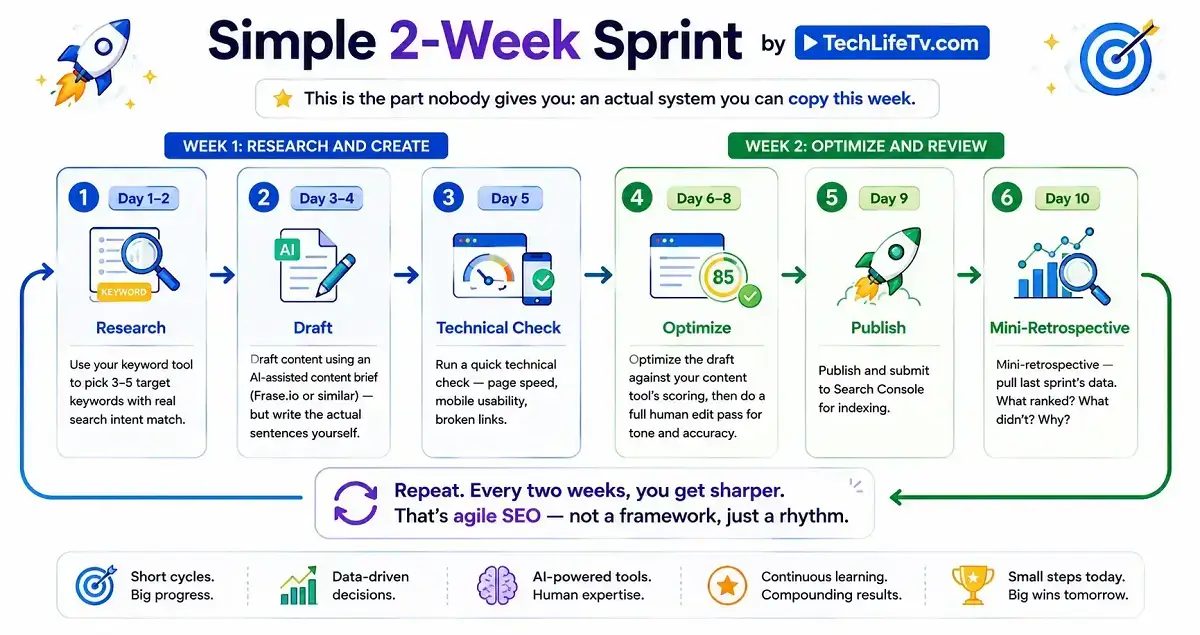
Week 1: Research and Create
Day 1 – 2: Select 3 to 5 target keywords with real search intent, matching with the use of your keyword tool.
Day 3–4: Draft content using an AI-assisted content brief (Frase.io or similar) — but write the actual sentences yourself.
Day 5: Make sure the website is technically sound – page speed, mobile usability, broken links.
Week 2: Optimize & Review.
Day 6-8: Make the draft better using the scoring that your content tool provides, then go through it with a human for tone and accuracy.
Day 9: Publish and submit to Search Console for indexing.
Day 10 : Mini-retro: fetch the data from the previous sprint. What ranked? What didn’t? Why?
Repeat. For every two weeks, you become sharper. That’s agile SEO — not a framework, just a rhythm.
Sprint KPIs
Numbers are the best way to keep a sprint honest. At the end of each cycle test:
- Organic clicks
- Impressions
- Click-through rate (CTR)
- Average position
- Indexed pages
- Conversions
- Internal links added
All you need to remember is that there are 7 of these and you don’t have to obsess about all of them. Select 2 or 3 that are similar to your current goal and watch them go sprint over sprint.
Where AI Should NOT Replace You
Let’s be honest about something most articles won’t tell you.
AI SEO software built to scale agile solutions is great at spotting keyword gaps, scoring content structure, and flagging technical problems. It’s not so great at:
- Citing and verifying information from primary sources.
- Adding real, first-hand experience that readers can trust.
- Judging what your specific audience actually needs.
Google has been clear for years: content needs evidence of real experience and expertise, not just AI-generated text that “sounds right.” Use AI to scale your research and structure — don’t lose the human voice, especially when you’re recommending something people might spend money on.
This isn’t a limitation to work around. It’s actually an advantage for a small operator — you can bring a tested, first-hand honesty that a large content factory can’t fake.
What We’ve Learned Running AI SEO Workflows
Here’s a question worth asking yourself: does publishing more content actually mean ranking better? Not always.
At TechLifeTV, we found something different works better. Instead of publishing a dozen articles at once and hoping for the best, we run small, focused SEO sprints. Each sprint follows the same loop: publish, check Search Console, adjust based on what the data actually shows. That rhythm kept our content sharp — it didn’t fade after the first draft the way rushed content usually does.
Does it work? The numbers say yes.
On one of our pages, here’s what changed over three sprint cycles:
- 6 months ago: Average position 7.8, CTR 4.5%
- 3 months ago: Average position 7.1, CTR 6.5%
- Last 28 days: Average position 6.1, CTR 11%
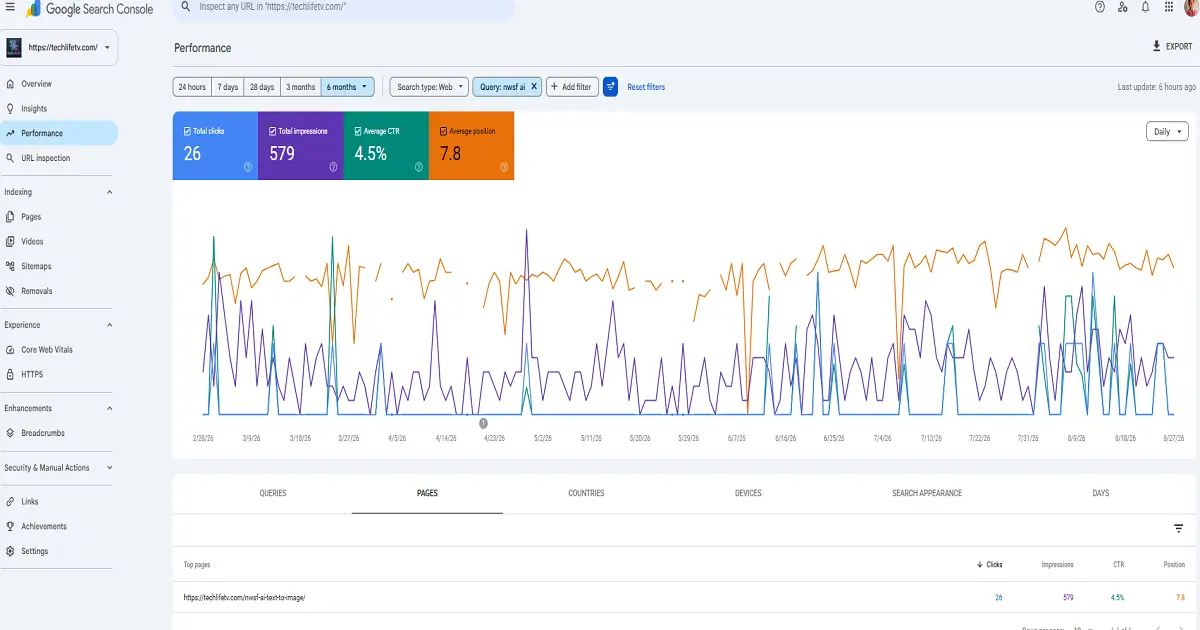
That’s a real jump in position — and CTR more than doubled. No new tool caused that shift. No secret hack, either. It came from checking real data every sprint and adjusting based on what searchers actually clicked on, not what we assumed they’d click on.
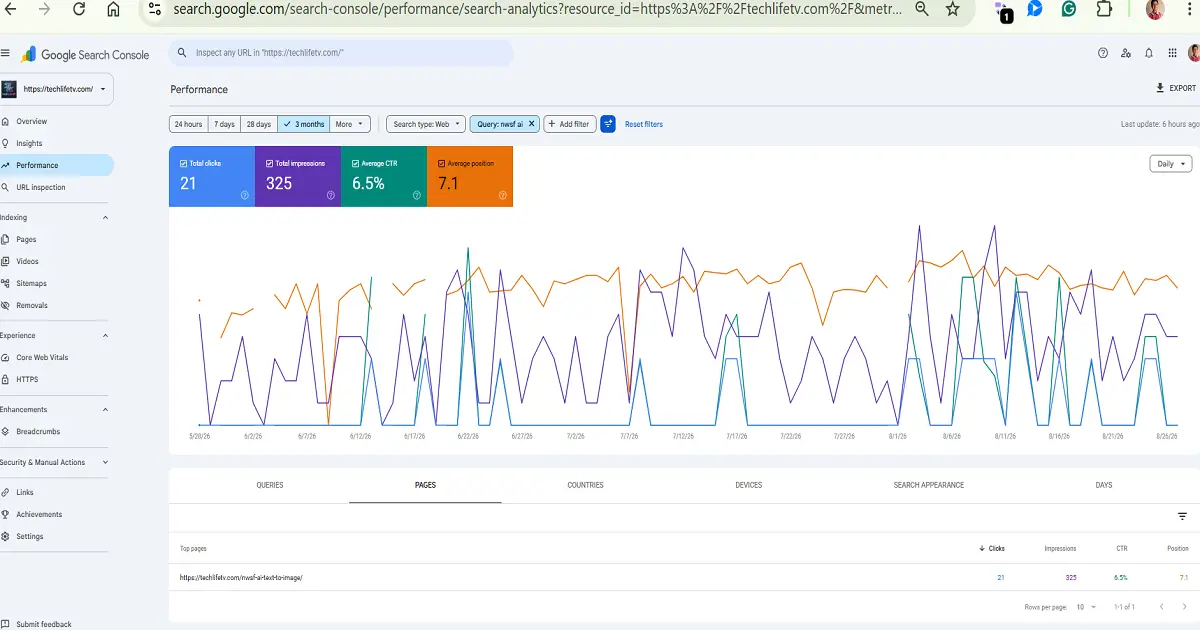
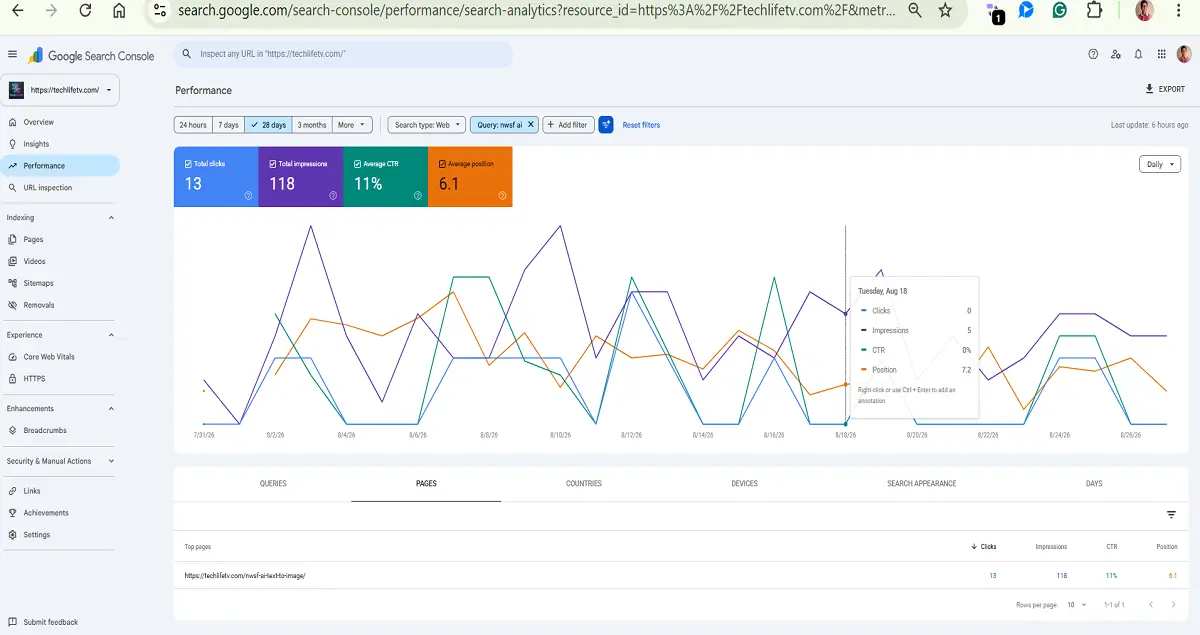
That’s the real lesson here: your ranking position tells you where you stand. Your CTR tells you whether your title and meta description actually earn the click once you’re there. You need both numbers, not just one.
Why This Matters for AI Search, Too
Google’s AI Mode doesn’t just crawl your page — it retrieves and cites specific answers from it. That changes what “good content” means.
A few things we’ve noticed working across these sprints:
- Clear, direct answers near the top of your content get picked up more often than buried ones.
- AI systems break your query into smaller sub-questions (this is called query fan-out) and pull the best answer for each piece — so covering related sub-topics matters more than repeating your main keyword.
- Entities and context carry more weight than exact-match keywords. Naming the right tools, concepts, and related terms builds relevance in a way that stuffing keywords never will.
The takeaway? Build content that’s answer-ready first. Rankings and clicks tend to follow.
Traditional SEO vs. Agile AI SEO
Put the two side by side, and the appeal of agile becomes obvious:
| Traditional SEO | Agile AI SEO |
| Quarterly content calendar | Two-week sprints |
| Manual keyword research | AI-assisted keyword discovery |
| Wait months to see results | Check results every sprint |
| One big audit per year | Quick technical checks built into each sprint |
| Content published and forgotten | Content reviewed and refreshed on schedule |
| Decisions based on instinct | Decisions based on Search Console and KPI data |
Neither column is “wrong.” But if you’re a small team competing against bigger budgets, the right column is where you actually out-adapt them.
What a Small-Scale Sprint Looks Like in Real Life
Picture a single affiliate site running this system for three months. Instead of one article every so often, you’re publishing six short, well-optimized pieces — each one improved based on lessons from the last sprint.
That’s the real promise here. Not a quick rankings spike — a compounding system where every sprint makes the next one smarter. It’s not flashy. It’s consistent. And that’s exactly why it works long-term.
Where This Fits Into a Bigger AI SEO Strategy
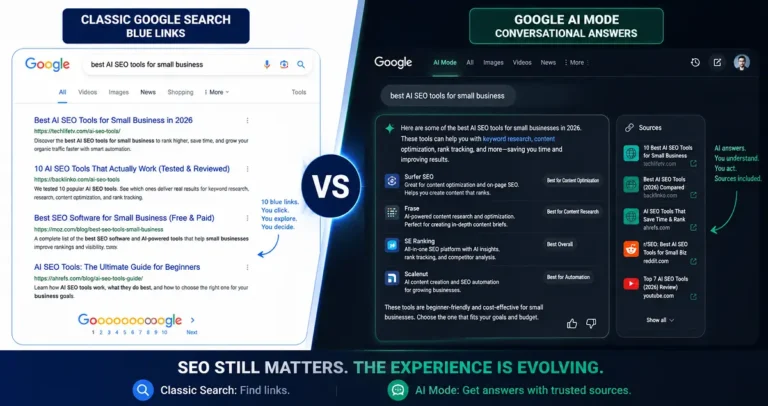
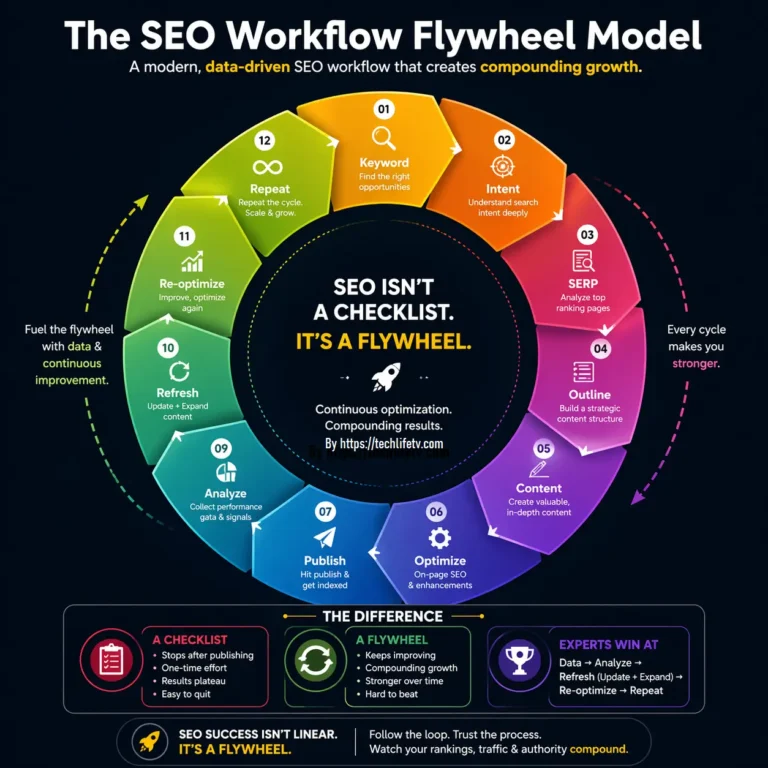
Agile sprints don’t just help you rank in classic search results. The same fast-feedback habit — publish, measure, adjust — is what keeps you visible as search shifts toward AI-generated answers. If you haven’t looked at how Google’s AI Mode changes what “ranking” even means, or want a broader look at the full modern SEO workflow this sprint system plugs into, those are good next reads.
Frequently Asked Questions
Do I need a large team to run agile SEO?
No. Agile is a rhythm, not a headcount. A single marketer can run sprints just as effectively as a large team — often more effectively, since there’s no approval process slowing things down.
How is AI SEO software different from traditional SEO tools?
Traditional tools mostly report data. AI SEO software takes that data and tells you what to do next — which keywords to prioritize, what to adjust, what to fix first.
How much should a beginner budget for AI SEO tools?
Start free (Search Console, Keyword Planner), then move to budget tools like KeySearch or Frase.io once you have steady traffic to justify the cost. Most beginners don’t need Semrush or Ahrefs on day one.
Are AI SEO tools a replacement for content writers?
No. AI tools handle research and structure well. Writing, judgment, and first-hand experience still need a human — especially since your content needs to meet Google’s expertise and trust standards.
How often should an agile SEO sprint run?
Two weeks is the sweet spot — long enough to see real results, short enough to stay flexible.
Do I need a backlink or competitor analysis tool to start?
Not right away. Backlink and competitor tools (Ahrefs, Semrush) are worth adding once you’re publishing consistently and want to find link gaps. At the very start, your time is better spent on keyword research and content quality.
Can AI SEO tools help with AI-generated search results, not just Google rankings?
Yes, to a point. The same habits that help you rank — clear structure, direct answers, credible sourcing — also help your content get picked up in AI-generated answers. AI tools can flag structural issues, but the actual trust signals (real experience, clear sourcing) still come from you.
FAQ: AI SEO Tools Scale Agile Solutions
Do I need a large team to conduct agile SEO?
No, Agile is a rhythm and not several people needed. It is just as effective for a single marketer to run sprints as it is for a large team — if not more so, when there’s no approval process.
How is AI SEO software different from traditional SEO software?
Traditional tools are primarily data-reporting tools. AI SEO software crunches that data and makes recommendations on what to do – what keywords to focus on, what to adjust, what to improve next.
How much should a beginner budget for AI SEO tools?
Use free tools first (Search Console, Keyword Planner) and then budget options, such as KeySearch or Frase.io, when you get regular traffic that you can afford. For most newbies, it is not necessary to use Semrush or Ahrefs on the first day.
Are AI SEO tools a replacement for content writers?
No, but as designed! With research and structuring done by AI tools, the writing and judgment, as well as the experience of first-hand contact, still require a human — not least because you want your content to withstand Google’s expertise and trust requirements.
How many times per month is an agile SEO sprint supposed to occur?
Two weeks is a good rule of thumb – long enough to get a sense of real results, but not so long that it makes it impossible to stay flexible.
Common Agile SEO Mistakes to Avoid
- Not measuring. If you’re not checking Search Console every sprint, you’re guessing, not iterating.
- Not verifying. AI can suggest the wrong keyword or shaky facts. Always double-check.
- Ignoring technical SEO. A poorly written page won’t rank — but neither will a slow, broken one.
- Chasing too many keywords at once. Ten keywords in two weeks isn’t focus; it’s spread-thin guessing. Pick three to five.
- Never updating old content. A sprint system only works if you revisit content, not just publish new posts.
Ready to Build Your Own Sprint System?
AI SEO tools and agile solutions aren’t the same thing, and that distinction matters. Together, they build repeatable systems that help small businesses keep publishing, optimizing, measuring, and improving – without waiting on anyone’s approval.
You don’t need an enterprise budget to run a smart, adaptive SEO process. You need the right tools for your stage, and a system you’ll actually stick to.
Start with one sprint. Pick three keywords, write one article, measure what happens. Then do it again – a little sharper each time.