How to Find Low Competition Keywords: A 4-Gate Filter That Works in 2026

By Md. Khalilur Rahman · Last updated October 28, 2026
Most new blogs burn months going after keywords they have no shot at winning. A better filter fixes that. In this guide, I’ll show you how to find low competition keywords with four quick checks. You can use free tools, cheap tools, or your own Google Search Console data. I’ll also run this post’s own keywords through the filter, so you can see where it works and where it falls short.
Quick answer: Write down 20 to 30 keyword ideas. Keep only the ones that pass four checks: keyword difficulty under about 35, a weak top 10, a content gap you can fill, and a clear match with what searchers want. Then look in Search Console for terms you already rank for on page two. Those are often your quickest wins.
Some links below are affiliate links. If you buy through one, I may earn a small commission at no extra cost to you.
This guide walks you through the exact process, step by step- free, cheap, and faster than you’d expect – using the right AI SEO tools.
What Are Low Competition Keywords?
Low competition keywords are search terms where the pages ranking today can be beaten. They might be thin, outdated, or a poor match for what people want. A low keyword difficulty (KD) score is a good hint, but the real test is whether you can write a clearly better answer than what’s already there.
Here’s a real example, using Semrush data from October 28, 2026:
| Keyword | KD | Global volume | What it means |
| how to find low competition keywords | 46 | 2.2K | Moderate. Big brands show up on page one. |
| how to find low hanging fruit keywords | 14 | 1.5K | Easy. Smaller sites can compete. |
Both keywords cover the same topic, but they’re very different fights.
KD is a tool’s best guess at how hard it is to outrank the current top 10. Every tool does the math differently, so a KD of 30 in one tool might show up as 45 in another. Semrush also has a Personal Keyword Difficulty score (PKD %) that adjusts the number for your own site, which Semrush covers in its guide.
What are low hanging fruit keywords?
Low-hanging fruit keywords are terms you have a real shot at winning fast. Some are new, low-competition terms. Others are queries you already rank for in positions 4 to 20. The agency Terra counts those among the quickest paths to growth.
Here’s a simple formula: low KD + weak SERP + intent match = low-hanging fruit keyword. If one piece is missing, skip it. The keyword should also fit your site’s topic, because off-topic keywords can hurt more than they help.
- Why bother with them?
- You get real traffic data quickly, so you learn what works.
- When the SERP is weak, you can often rank without a big backlink profile.
- People searching a specific question are often closer to taking action.
- Every page that ranks adds topical authority, which helps with harder keywords later.
Table of Contents
What Is a Good Keyword Difficulty Score?
For a brand-new blog, KD 0 to 20 is the safest place to start. Once you have some content, KD 21 to 35 is fair game. Above 35, domain authority starts to matter a lot more. Treat these ranges as a rule of thumb, because each tool scores KD on its own scale.
| KD range | Difficulty | Best for |
| 0–20 | Very easy | Brand-new blogs (under 3 months) |
| 21–35 | Easy | Blogs under 6 months with some content |
| 36–50 | Moderate | Sites with growing authority |
| 51–70 | Hard | Authority sites with strong backlinks |
| 71–100 | Very hard | Skip for now |
Is your blog under three months old? Stay at KD 0–20. The filter below uses KD 35 as the cutoff, which makes sense once you’ve published a bit and built some momentum.
Why Low Competition Does Not Mean Low Value
Say a keyword gets 2,300 searches a month and you land a 15% click-through rate. That’s about 345 visits a month. Click-through rates swing a lot with position and AI Overviews, so treat that as a ballpark, not a promise. Still, 345 targeted visits from one post is real traffic. Ten posts like that start to add up.
Now look at the other side. Over the last three months, this guide got 1,324 impressions and zero clicks in Search Console, at an average position of 74. That’s page eight, and almost nobody goes there. A page-one spot for a smaller keyword nearly always beats page eight for a bigger one.
For most new sites, low competition keywords are the main plan, not the backup.
Best Tools to Find Low Competition Keywords
You don’t need Semrush or Ahrefs to get started. Below are your options, from free to premium. If you want more choices, check out my guide to AI SEO tools and my roundup of simple SEO software for small businesses.
| Tier | Tool | Typical cost | Best for |
| Free | Google Keyword Planner + Keyword Surfer + Search Console | $0 | Beginners with no budget |
| Budget | Keysearch + LowFruits | Keysearch $24/mo; LowFruits credits from $25 | Lots of data for the price |
| Runner-up | Mangools KWFinder | From about $29.90/mo billed yearly | A clean, easy interface |
| Long-term value | Ubersuggest | $29/mo or $290 lifetime | Solo bloggers on a tight budget |
| All-in-one | SE Ranking | $103.20/mo billed yearly ($129 monthly) | Keyword research, rank tracking, and audits in one tool |
| Premium | Semrush / Ahrefs | About $129/mo /$139.5/mo | Bigger, established sites |
Prices checked October 28, 2026 from public sources. They change often, so confirm on each pricing page before you buy.
Free: Google Keyword Planner, Keyword Surfer, and Search Console
Google Keyword Planner is free, but it was built for advertisers. Its Competition column shows how crowded the ad market is, not how hard it is to rank. A keyword marked Low there can still be tough in organic search. So use Keyword Planner for ideas and volume ranges, then check difficulty in another tool.
To open it, sign in to Google Ads, pick Expert Mode, and create an account without a campaign. Google moves these menus around, so look for Tools, then Keyword Planner.
Keyword Surfer is a free Chrome extension. It shows estimated monthly searches right next to your Google results and suggests related keywords as you type.
Here’s a simple free workflow:
- Pull 20 to 30 ideas from Keyword Planner.
- Expand each one with Google autocomplete.
- Collect the questions in People Also Ask. They’re great FAQ material.
- Check volumes in Keyword Surfer and keep terms with at least 100 to 500 searches a month.
Budget pick: Keysearch plus LowFruits
Keysearch gives you KD, volume, CPC, trends, and a SERP analyzer. Keysearch official site lists the Starter plan at $24 a month and Pro at $48 ($20/month or $40 billed annually)with two months free. To find low competition keywords, search a seed term, set max KD to 30, add a volume floor, and sort by volume. Then open the SERP analyzer on your best candidates. You may find a coupon like KSDISC at checkout. Try Keysearch.
LowFruits works a little differently. Instead of relying on a single KD number, it shows you weak spots in the SERP, like small sites ranking high. Credits start at $25 for 2,000. New users get 10 free credits with no card, and subscriptions start around $249 a year. Find your candidates in Keysearch, then confirm them in LowFruits. Try LowFruits.
Your first month should cost about $24 for Keysearch plus $25 in LowFruits credits.
Runner-up: Mangools KWFinder
KWFinder has one of the cleanest interfaces at this price. It color-codes difficulty, so green means easy and red means hard. One Mangools plan also includes SERPChecker, SERPWatcher, LinkMiner, and SiteProfiler. Plans start around $29.90/month billed yearly, or about $49/month month-to-month. It’s worth paying more than Keysearch mainly if you care about a cleaner screen.
Long-term value: Ubersuggest
Ubersuggest costs $29 a month, or $290 once for the lifetime deal. Compared with $348 a year on the monthly plan, the lifetime deal pays for itself in about 10 months. Reviewers often say its difficulty data isn’t as strong as paid rivals, so double-check any keyword that looks promising. Also read recent reviews before you buy any lifetime deal.
All-in-one: SE Ranking
If Semrush and Ahrefs feel too pricey but you want more than a keyword tool, SE Ranking is the middle path. One plan covers keyword research, rank tracking, site audits, competitor research, and a backlink checker. It also tracks how you show up in AI search. I’ve used it, and the parts I lean on for this kind of work are the keyword tool, the Keyword Grouper, and the AI Overviews tracker.
Here’s the price picture. SE Ranking’s Core plan is $129 a month, or $103.20 a month if you pay yearly. Semrush Pro runs $139.95 a month ($117.33 yearly), and most 2026 pages list Ahrefs Lite at about $129 a month. So SE Ranking is cheaper, but the gap is smaller than it used to be. Where it really pulls ahead is the limits you get per dollar. One 2026 pricing breakdown lists 2,000 tracked keywords on Core, against 500 on Semrush Pro and 1,000 on Ahrefs Lite.
Watch out for older articles. SE Ranking changed its plans in 2026, and many pages still show the old $44 Essential tier. There’s a 14-day free trial, so you can test it before you pay.
Premium: Semrush and Ahrefs
Entry plans run about $117 to $140 a month. That makes sense once your site earns enough to cover them. Semrush’s Keyword Magic Tool has a Questions filter and PKD %, and its Keyword Gap tool shows terms your rivals rank for that you don’t. On a tighter budget, start with these Semrush free alternatives.
How to Find High Volume Keywords With Low Competition
To find high-volume keywords with low competition, filter for KD under 30 and a volume floor that fits your niche. Then confirm the SERP is weak. “High volume” is relative. In a small niche, 500 searches a month can be a lot.
- In Keysearch, set max KD to 30 and a minimum volume of 100 to 500. Sort by volume.
- Open the SERP analyzer for each result. Drop any term where strong sites fill the top five.
- Use autocomplete and People Also Ask to find long-tail versions most bloggers miss.
- Confirm your shortlist in LowFruits, then narrow it to 10 to 15 candidates.
Then run each one through the 4-Gate Filter below. Productive Blogging also makes a fair point about not ignoring low-volume terms. Ranking well for small keywords builds trust and traffic over time.
How to Find Low-Hanging Fruit Keywords in Google Search Console
The fastest low-hanging fruit keywords are the ones you already rank for. Open Search Console, sort your queries by impressions, and look for terms sitting at positions 4 to 20, or terms with lots of impressions and few clicks. Then improve the page that already ranks instead of starting a new post.
- Go to Performance, then Search results, and set the date range to the last 3 months.
- Open the Queries tab and sort by impressions.
- Find queries with an average position from 4 to 20, or high impressions and no clicks.
- Open the page that ranks. Does it fully answer the question? Is it up to date? Is a key subtopic missing?
- Add the missing section, fix old facts, and link to the page from related posts.
Here’s what my own data says about this guide:
| Query | Impressions | Average position |
| low competitive keywords | 172 | 78.2 |
| low competition keywords | 158 | 74.8 |
| low-competition keywords | 145 | 74.0 |
| how to find low competition keywords | 123 | 67.5 |
| low competition keywords list | 102 | 79.1 |
To be clear, every one of these queries sits between positions 67 and 79, so none of them are low-hanging fruit yet. Still, the list shows how searchers phrase the problem. They say both “competition” and “competitive.” They ask for a “list,” a “finder,” and a “tool.” That’s why this guide now covers all of them.
The 4-Gate Keyword Filter
The 4-Gate Keyword Filter is a ten-minute check you run before you write a single word. A keyword has to pass all four gates: KD under 35, a weak SERP, a content gap, and a clear intent match. It answers one question: can I realistically rank for this?
KD alone can fool you. A KD 26 keyword packed with fresh pages from authority sites can be harder than a KD 45 keyword where thin, outdated posts hold the top five. The four gates catch that.
Gate 1: Is the KD under 35?
If your blog is under six months old and the KD is above 35, move on. There are plenty of better options. If it’s under 35, keep going.
Gate 2: Is the SERP weak?
Search the keyword and see who ranks. Ask whether those pages earned their spot or just filled an empty gap. A SERP keyword research tool makes this faster. Keysearch’s SERP analyzer, Mangools SERPChecker, and LowFruits all show how strong each ranking page is. Score the top five results:
| Signal | What to look for | Points |
| Low-authority sites | Reddit, Quora, or unknown blogs in the top 5 | +2 |
| Outdated content | Articles from 2021 to 2023 dominating page one | +2 |
| Thin content | Posts under 1,200 words in top positions | +2 |
| Intent mismatch | Results that don’t answer what searchers want | +2 |
| No big brands | No Semrush, Ahrefs, Forbes, or HubSpot in the top 5 | +2 |
Score 6 or more? The SERP is weak. Keep going.
Low-authority sites on page one often mean Google had nothing stronger to show. Old articles leave room for a current guide. Thin posts are usually placeholders. A mismatch, like a generic definition for a “best tools” search, means nobody has built the right page yet. And if the big brands are missing, the SERP is wide open. Two free helpers: MozBar for authority and a word-counter extension for length.
Gate 3: Is there a content quality gap?
Read the top five pages like a critic. Look for these weak spots:
- No clear heading structure
- No comparison tables, data, or real examples
- No FAQ for follow-up questions
- Data from 2022 or earlier
- 500 to 1,200 words with little depth
If you spot three or more in the top results, there’s a gap. But if most of the top pages run 2,000 to 4,000 words with current tables, clean structure, and a People Also Ask FAQ, pick another keyword.
You don’t need a perfect post. You just need one that’s clearly better. Before you write, ask yourself:
- Is my post clearly more complete than the top result?
- Do I have a comparison table the top five lack?
- Do I have 2025 or 2026 data?
- Will I answer People Also Ask questions in an FAQ?
- Do I answer the main question faster and more clearly?
Gate 4: Does your post match the search intent?
Look at what kind of content wins the top spots. Google is showing you what searchers want.
| Intent | Example keyword | Best format | Worth targeting? |
| Informational | how to find low competition keywords | Step-by-step guide | Yes, your main traffic zone |
| Commercial | best keyword research tools | Comparison list with pros and cons | Yes, your affiliate zone |
| Transactional | Semrush pricing | Landing page or product review | Limited for bloggers |
| Navigational | Ahrefs login | Brand page | Not useful for bloggers |
Informational posts build your audience. Commercial posts, like comparisons and roundups, earn affiliate commissions. You want both. Then ask one honest question: will a searcher get exactly what they came for, right away? If yes, write it. If not, rework the angle first.
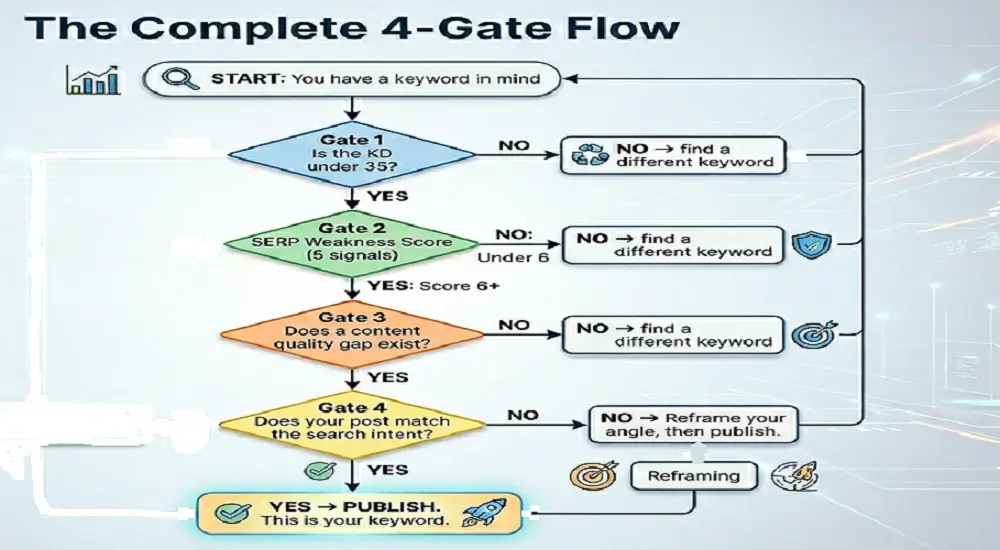
The 4-Gate Flow for Low Competitive Keywords (Quick Recap)
- Start with a keyword idea.
- Gate 1: Is KD under 35? If not, pick another keyword.
- Gate 2: Is the SERP weakness score 6 or higher? If not, pick another.
- Gate 3: Is there a content gap you can fill? If not, pick another.
- Gate 4: Does your post match the search intent? If not, rework it.
- Passed all four? Publish, check the results, improve, and repeat.
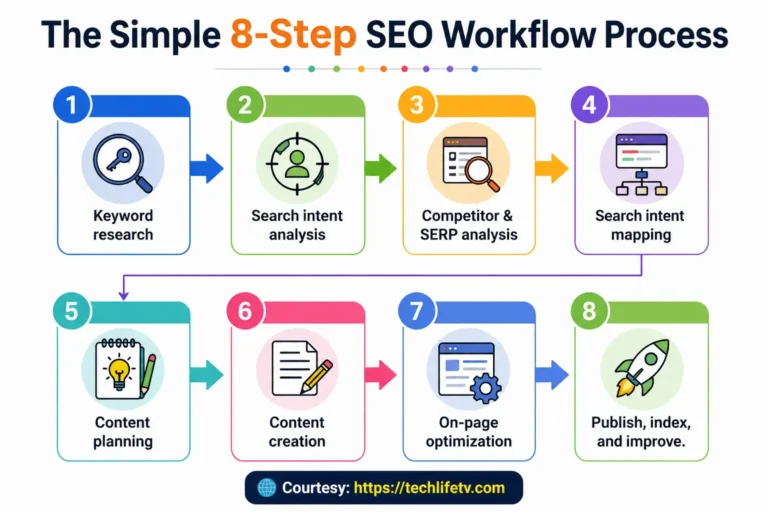
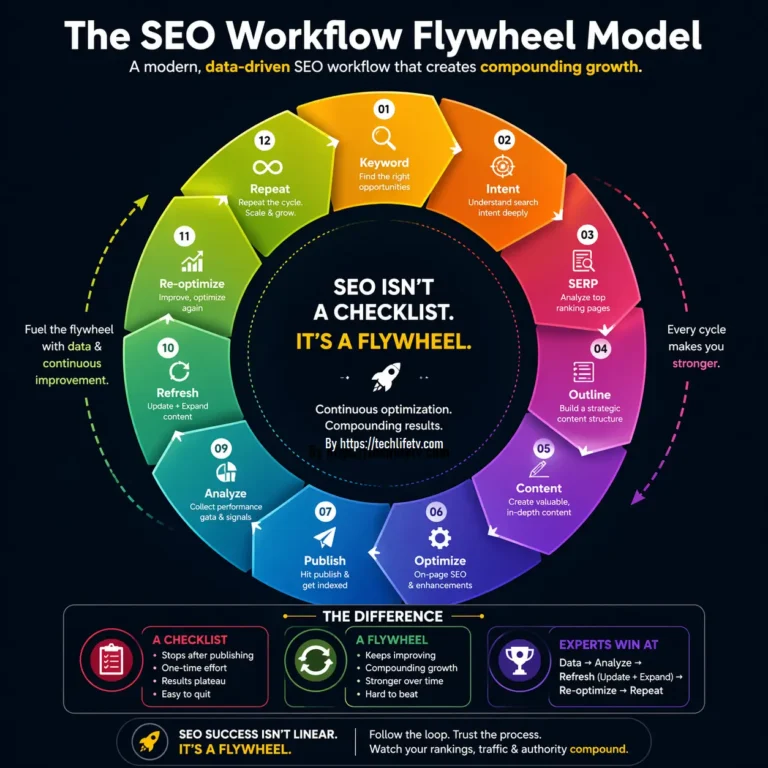
Green on all four gates? Stop second-guessing and start writing. Then plug the keyword into your SEO workflow.
4-Gate Flow for Low Competitive Keywords
The Complete 4-Gate Flow for Low Competitive Keywords
Green all four gates? You’ve found a low-hanging fruit keyword. Stop second-guessing it. Start writing.
The whole procedure consumes less than ten minutes on each keyword after you have done it a few times. Run it on all your keywords, and you will never again spend three months on a post that had no realistic chance of ranking.
Worked Example: Running This Post’s Own Keywords Through the Filter
I ran this guide’s three target keywords through Gate 1, using Semrush data from October 28, 2026. All three are informational. Two pass easily. The main keyword doesn’t, and I want to be upfront about that.
| Keyword | Global volume | KD | CPC | Gate 1 (KD under 35) |
| how to find low competition keywords | 2.2K | 46 | $8.70 | No (a stretch) |
| how to find high search low competition keywords | 270 | 28 | $0 | Yes |
| how to find low hanging fruit keywords | 1.5K | 14 | $0 | Yes |
The main keyword is a stretch. A KD of 46 sits above this guide’s own Gate 1 line. I’m still going after it because it has the most volume and the highest CPC, and because the two easier keywords support the same page. Think of it as a longer-term bet, not a quick win.
For Gates 2 and 3, I read three pages that rank for these topics. Semrush’s guide (updated April 24, 2026) is short and tool-focused. Productive Blogging’s guide (updated December 31, 2025) is built around Keysearch and a scoring spreadsheet. Terra’s guide treats low-hanging fruit as terms you already rank for. None of the three gives you a scored SERP test, and only Terra mentions Search Console. Semrush showing up in the top results also means the “no big brands” signal fails for the main keyword.
That gap is the angle of this guide: a scored four-gate filter, a Search Console method, and a section on AI search.
One more thing worth saying out loud. This page has averaged around position 74 for its main terms, and a KD 46 target is part of the reason. If you’re just starting out, go after the KD 14 kind of keyword, not the KD 46 kind.
How to Find Low Competition Keywords for AI Search
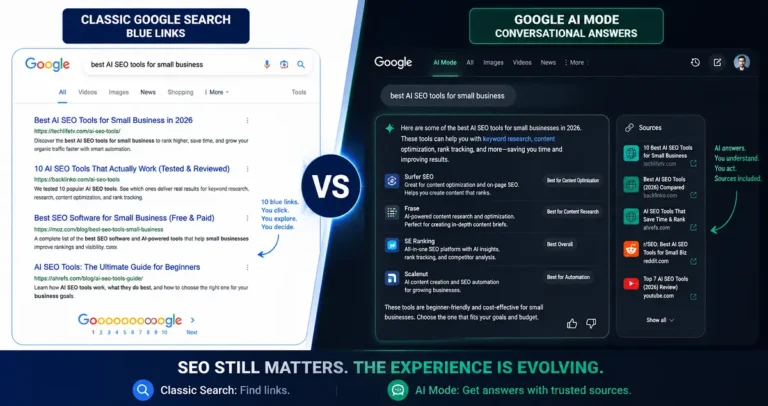
AI search tools like Google AI Overviews, ChatGPT, and Perplexity answer full questions. So low competition now includes longer, conversational queries too. Look for specific questions where today’s answers are thin, then write a clear answer that stands on its own. Nobody can guarantee a citation, but this makes your page easier to quote.
- Use question filters. Semrush’s Keyword Magic Tool has a Questions filter, and Semrush says question-style terms often trigger AI Overviews.
- Turn the keyword into a prompt. For example: “What’s the cheapest way to find low competition keywords for a new blog?”
- Test the prompt. Run it in Google AI Mode, ChatGPT, and Perplexity, and note which sources get cited. If you see forums, thin blogs, or old posts, the topic is open.
- Write to be quoted. Put a direct answer of 40 to 60 words under each heading. Use tables, keep one idea per paragraph, name tools and metrics the same way every time, and show an update date.
- Keep tabs on it. Watch impressions in Search Console and re-run your test prompts once a month. SE Ranking’s AI tracking can help here too. For more tools, see my guide to AI search visibility management tools.
A Simple Scoring Template to Pick What to Write First
Score each keyword that passes the gates on three things: volume, ease, and fit. Add up the scores and write the highest totals first.
| Score | Volume (monthly searches) | Ease (KD) | Fit with your site |
| 5 | 3,000+ | 0–15 | Core to your topic and offer |
| 4 | 1,000–2,999 | 16–25 | Strong match |
| 3 | 300–999 | 26–35 | Related |
| 2 | 100–299 | 36–50 | Loose |
| 1 | Under 100 | 51+ | Off-topic |
Here’s the template applied to this guide’s keywords. The fit scores are my own call.
| Keyword | Volume | Ease | Fit | Total |
| how to find low competition keywords | 4 | 2 | 5 | 11 |
| how to find high search low competition keywords | 2 | 3 | 4 | 9 |
| how to find low hanging fruit keywords | 4 | 5 | 5 | 14 |
A rough guide: 12 or more, write it first. 9 to 11, write it later or fold it into a bigger post. Under 9, skip it. The low-hanging fruit keyword wins with 14 out of 15.
Frequently Asked Questions
Everything you need to know about finding low-competition keywords, evaluating keyword difficulty, and improving your SEO.
What are low-hanging fruit keywords for SEO?
Low-hanging fruit keywords are search terms you can realistically win soon. The pages ranking are weak or off-intent, or you already rank for the term on page two. The formula is low KD plus a weak SERP plus a clear intent match. If any one of those is missing, the keyword may not be worth writing for.
What is a good keyword difficulty score for beginners?
For a blog under three months old, aim for KD 0 to 20. After three to six months of steady publishing, KD 21 to 35 is realistic. Above 35, sites with strong domain authority tend to win. Use these ranges as a rule of thumb, since each tool scores KD differently.
Can I rank for low competition keywords without backlinks?
Yes, when the SERP is genuinely weak. If the ranking pages have low authority, thin content, and few links, a well-built, current post that matches intent can beat them. It won’t work on a SERP full of strong brands, so check the SERP first and then decide.
How do I find high-volume keywords with low competition for free?
Start with Google Keyword Planner for ideas and volume ranges, then add Keyword Surfer for estimates on the results page. Use People Also Ask and autocomplete to find long-tail versions. Keyword Planner’s competition column measures ads, so judge SEO difficulty by reading the actual top 10.
How do I find long-tail keywords with low competition?
Enter a broad seed term, then expand it with autocomplete, People Also Ask, and a question filter in your keyword tool. Keep terms with KD under 35 and at least 100 to 500 monthly searches. Then read the top results. If they’re thin, old, or off-intent, the long-tail term is open.
Is KD 26 considered low competition?
Yes. KD 26 falls in the Easy range for a blog that has published for a few months. It’s not a guarantee, though. A KD 26 keyword full of fresh, strong pages can be harder than a KD 45 keyword full of weak ones. Run all four gates before you commit.
What is the best affordable keyword research tool?
For data depth at a low price, Keysearch (from $24 a month) is a strong pick, and LowFruits credits (from $25) help you confirm weak SERPs. If you want a cleaner screen, Mangools KWFinder starts around $29.90 a month billed yearly. For an all-in-one tool, SE Ranking costs less than Semrush. Prices checked October 28, 2026.
Is SE Ranking cheaper than Semrush or Ahrefs?
Yes, but by less than it used to be. SE Ranking Core costs $129 a month, or $103.20 billed yearly. Semrush Pro is $139.95 ($117.33 yearly), and Ahrefs Lite is listed at about $129. One 2026 breakdown shows SE Ranking tracking far more keywords per dollar. Prices checked October 28, 2026.
How long does it take to rank for low competition keywords?
Nobody can promise a timeline. It depends on your domain age, how often you publish, and how weak the SERP is. Early movement often shows up within weeks to a few months on easy keywords, but it varies. For the record, this guide targets a KD 46 keyword and still averages position 74.
Are zero competition keywords real?
Rarely. Almost every query has some page competing for it. A “zero competition” keyword usually means the tool has thin data or almost no one searches it. Treat it as a very low competition keyword, and still check the SERP and intent before you write.
Conclusion: Your Next Move Starts Today
Finding low competition keywords is a process, not a mystery. Build a list with a free or cheap tool. Run each keyword through the four gates. Check Search Console for pages you can improve. Then pick one keyword and write this week.
On a zero budget, open Search Console and Keyword Planner today and install Keyword Surfer. When you want to move faster, Keysearch plus a few LowFruits credits is a practical upgrade. SE Ranking is worth a look if you’d rather have everything in one place. Keep going until you have ten keywords that pass all four gates. Then write. One keyword. This week.