How Fast Can You Make Money With Affiliate Marketing? [2026 Reality Check]

Quick Answer
Most beginners make their first affiliate commission somewhere between month 3 and month 6 — if they’re publishing consistently and targeting the right keywords. If you already have an audience (a YouTube channel, an email list, or an active social following), you could see your first commission this week. Building a steady monthly income — think $500 to $2,000 a month — usually takes 6 to 12 months of focused work. There’s no magic shortcut to real, lasting income. But there are absolutely smarter moves that cut months off your learning curve.
Table of Contents
Let me be upfront with you.
When I started affiliate marketing back in 2013, I wasn’t chasing passive income dreams or trying to fire my boss. My son was seriously ill, the medical bills were piling up, and I was running out of options. I found affiliate marketing almost by accident — and spent the first few months getting absolutely nowhere.
My first affiliate commission? ($7.00) Seven dollars.
It wasn’t life-changing. But it proved the model actually worked. And that was enough to keep going.
More than a decade later, I’ve seen every version of this journey — beginners who earned commissions in their first month, and people who grinded for a year with nothing to show. The difference almost always came down to the same handful of decisions.
This guide tells you exactly what those decisions are, what a realistic affiliate marketing timeline looks like based on your specific starting point, and how to get to your first commission faster without cutting corners that’ll cost you later.
What Actually Determines How Fast You Earn?
Here’s the thing most “how to make money with affiliate marketing” articles won’t tell you: your timeline isn’t random. It’s driven by five specific factors, and understanding them upfront will save you months of spinning your wheels.
1. Your Traffic Source
Traffic is the lifeblood of affiliate income. No eyeballs, no commissions. But the channel you choose doesn’t just affect how fast you get traffic — it affects how fast that traffic converts into sales.
| Traffic Source | Time to First Sale | Long-Term Scalability | Best Fit For |
| SEO / Blog | 3–6 months | ⭐⭐⭐⭐⭐ Compounds over time | Passive, long-term income |
| YouTube Channel | 2–6 weeks (existing subs) | ⭐⭐⭐⭐ High | Product reviews, tutorials |
| Email List | Same day (if list exists) | ⭐⭐⭐⭐ Reliable | Direct promotions |
| TikTok / Reels | Days to weeks | ⭐⭐⭐ Viral but unpredictable | Trendy, low-cost products |
| 4–8 weeks | ⭐⭐⭐ Steady | Lifestyle, DIY, home | |
| Paid Ads (PPC) | Hours to days | ⭐⭐⭐⭐⭐ Unlimited (needs budget) | High-ticket products |
| Facebook Groups | 1–4 weeks | ⭐⭐ Limited | Community-based niches |
2. Your Niche
Not all niches are created equal when it comes to speed. The question to ask yourself isn’t “what do I love?” It’s “what are people actively searching for with their wallet already open?”
Niches like SaaS tools, AI SEO Tools, web hosting, personal finance, and online education have high buyer intent built in — readers are actively comparing options and looking for a recommendation. Broader topics like general wellness or lifestyle blogging attract curious readers, not ready buyers.
The more specific your niche, and the closer your content sits to an actual purchase decision, the faster your commissions arrive.
3. Your Content Quality and Topical Authority
Google doesn’t reward one brilliant article. It rewards websites that cover a topic deeply from multiple angles. An affiliate site with 15 well-organized, interlinked posts on “AI writing tools” will consistently outrank a site with one long post on the same topic.
Topical authority creates a compound effect: more content leads to faster indexing, stronger rankings, more traffic, and more commissions. It’s slow to build, but once it’s there, it works for you around the clock.
4. Your Domain Age and Backlinks
This one’s frustrating but real: brand new websites go through what the SEO community calls the “Google sandbox.” For the first 3 to 6 months, your site may struggle to rank for even easy keywords, regardless of how good your content is.
There’s no way around the sandbox with SEO. But you can bypass it entirely with paid ads or social media traffic while your domain builds authority in the background.
5. Your Experience and Systems
A first-time affiliate marketer spending 10 hours a week will move more slowly than someone who’s done this before. That’s not a knock on beginners — it’s just reality. The good news: your second affiliate site will grow twice as fast as your first, because you’ll already know what to avoid.
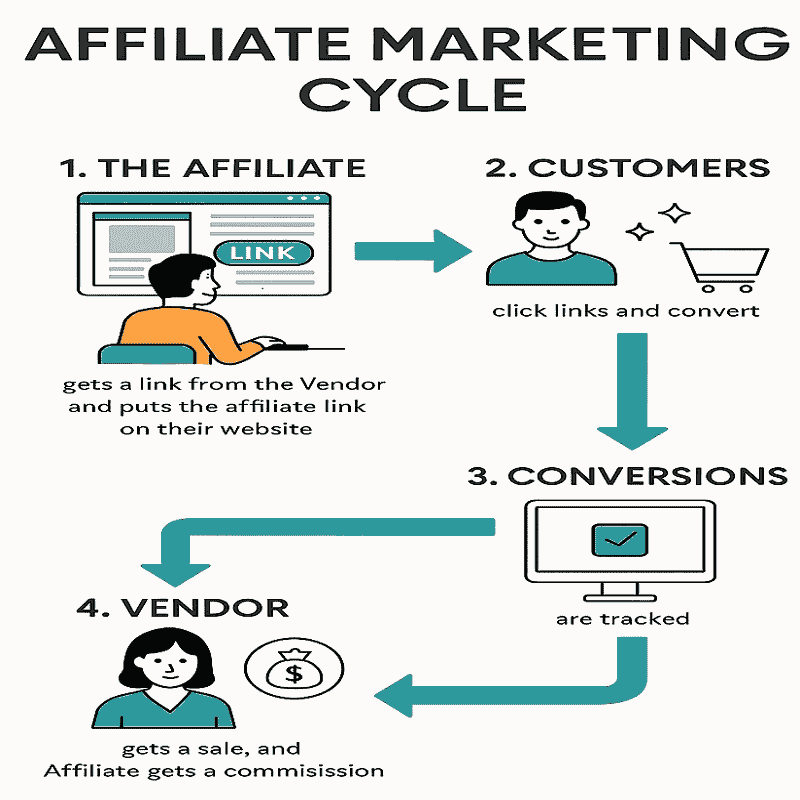
What is affiliate marketing?
Affiliate Marketing is Promoting Someone else’s product or service in exchange for a Commission
The Realistic Affiliate Marketing Timeline (Month by Month)
Let’s cut through the fantasy and look at what a typical SEO-first affiliate journey actually looks like, starting from zero.
| Time Period | What You’re Focused On | Realistic Earnings |
| Weeks 1–2 | Build your site, pick your niche, and join affiliate programs | $0 |
| Weeks 3–4 | Publish your first 3–5 articles | $0 |
| Month 2 | Consistent publishing, keyword research, and site structure | $0 – $10 |
| Month 3 | First trickle of organic traffic, possible first commission | $0 – $50 |
| Months 4–6 | SEO starts to click, steady small commissions | $50 – $300 |
| Months 6–9 | Content compounds, income becomes more predictable | $300 – $1,000 |
| Months 10–12 | Email list growing, optimizing what works, scaling up | $500 – $2,000+ |
| Year 2+ | Passive income, potential full-time revenue | $2,000 – $10,000+ |
These are realistic ranges, not guarantees. Your actual numbers depend heavily on niche competition, how much content you publish, and how consistent you are. The top of each range reflects strong execution. The bottom reflects a slow start with minimal publishing.
Your Timeline Based on Where You’re Starting From
Here’s something most guides skip: your starting point matters just as much as your strategy. The same effort applied in two different situations can produce wildly different timelines.
It sounded almost too good to be true: promote products online and earn commissions when people purchase through your links—no inventory, shipping, or customer service—just pure digital marketing.
Scenario 1: You’re a Complete Beginner With a Brand-New Blog
Time to first commission: 3–6 months
This is the most common starting point, and honestly, the hardest one. You’re building a website from scratch, writing content that hasn’t ranked yet, and waiting for Google to notice you. The first two or three months can feel like shouting into a void.
But here’s what keeps me going back to SEO despite the slow start: a blog post that ranks in month six can earn you commissions for the next five years without you touching it again. That compounding is worth the patience.
The move that matters most here: Target keywords with a difficulty score under 20. Don’t try to rank for anything you’re not genuinely able to compete for yet.
Scenario 2: You Already Have a YouTube Channel
Time to first commission: 2 to 6 weeks
If subscribers already trust you, you can skip the months-long runway almost entirely. Drop affiliate links in your video description, mention the product naturally in your content, and you could have commissions rolling in within a few weeks of your first affiliate-focused video.
The key is choosing a product that your audience actually needs — not just one with a high commission rate.
Scenario 3: You Have an Email List
Time to first commission: The same day you send your first promotional email
An email list is the single fastest affiliate income channel in existence. Even 500 engaged subscribers can generate real commissions within hours of a single well-crafted email. This is why building your list from day one — even when you have no traffic — is one of the smartest moves you can make.
Scenario 4: You’re Running Paid Ads
Time to first commission: 24 to 72 hours
Paid advertising bypasses every organic bottleneck. You can have targeted traffic landing on an affiliate offer within hours of setting up a campaign. The catch is that your first commission doesn’t mean you’re profitable — ad costs often eat into margins, and most beginners lose money during the testing phase.
Budget $500 to $1,000 for testing before you expect to come out ahead. If you go in expecting to lose a little while you learn, you won’t panic when that happens.
Scenario 5: You’re Going All-In on TikTok or Instagram Reels
Time to first commission: 1 to 4 weeks
Short-form video can drive traffic faster than almost anything else — but it’s also the least predictable. One viral video isn’t an income stream. It’s a spike. Build on social if you enjoy it, but treat it as a traffic amplifier that feeds your email list and blog — not your only strategy.
How Much Can You Realistically Earn? (Actual Benchmarks)
Let’s talk numbers — real ones, not the $47,000-a-month screenshots you see on Instagram.
| Stage | Typical Monthly Earnings | When to Expect It |
| Brand new (0–3 months) | $0 – $50 | Months 1–3 |
| Still figuring it out (3–6 months) | $50 – $500 | Months 3–6 |
| Starting to gain traction (6–12 months) | $500 – $2,000 | Months 6–12 |
| Established affiliate (1–2 years) | $2,000 – $8,000 | Year 1–2 |
| Experienced / scaling (2+ years) | $8,000 – $50,000+ | Year 2+ |
These numbers are directional, not promises. The top of each range requires strong execution, a competitive niche, multiple affiliate programs, and usually an email list doing some heavy lifting. But the bottom of each range? Pretty achievable for a consistent beginner.
Can You Make Money With Affiliate Marketing in 30 Days?
Short answer: yes, but not in the way most people think.
If you already have an audience — even a modest one — making your first commission in 30 days is completely realistic. Pick a product your audience genuinely needs, create honest, helpful content about it, and put your affiliate link in front of people who already trust you.
If you’re starting completely from scratch with a new website and banking on SEO? That 30-day commission is unlikely. Not impossible — but unlikely. New websites typically need 60 to 90 days before Google even starts to surface them for low-competition keywords.
The truth: 30-day affiliate income is a social media story, not an SEO story. Both are valid paths. Just know which one you’re on before you set your expectations.
How to Speed Up Your First Affiliate Commission
You can’t shortcut domain authority. You can’t make Google trust you overnight. But you can absolutely eliminate the time you waste making avoidable beginner mistakes. Here’s what actually moves the needle.
1. Start with Buyer-Intent Keywords, Not Just Informational Ones
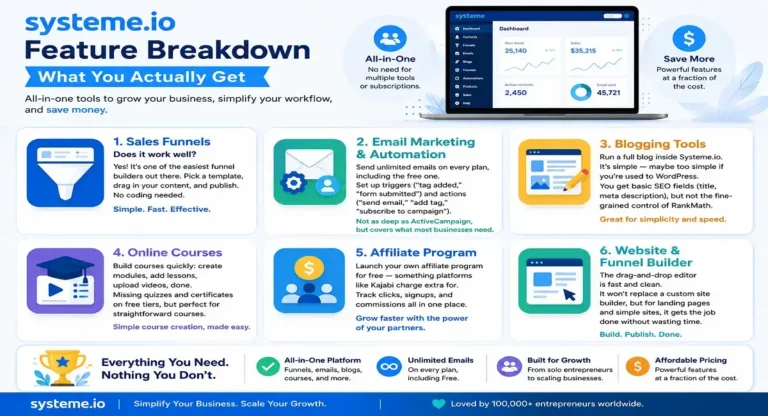
One of the biggest mistakes beginners make is focusing only on informational keywords like “what is affiliate marketing” or “how does affiliate marketing work?” While these topics can bring in plenty of traffic, most readers are still in the learning stage and aren’t ready to make a purchase. If your goal is to earn affiliate commissions, start with buyer-intent keywords instead. Think of searches like “best SEO tools for small businesses,” “Is Systeme.io worth it?” or “Frase.io vs. Surfer SEO – Which is better?” These people are already comparing products and looking for the final piece of information before making a decision, which means they’re much more likely to convert.
Here are a few examples of buyer-intent content:
How to Find Low-Competition Buyer-Intent Keywords
- Best SEO Tools for Small Businesses
- Frase.io vs Surfer SEO — Full Comparison
- Systeme.io Review — Is It Worth It?
- Stealth Writer Review
2. Go Long-Tail or Go Home (At Least at First)
A brand-new site has zero authority. You cannot rank for “affiliate marketing.” Period. But “best affiliate programs for food bloggers in 2026” or “how to start affiliate marketing with no money on Pinterest”? Those are winnable.
Long-tail keywords have lower search volume but much less competition — and the people searching them are often one step away from making a decision. Win those first. Build authority. Then go after bigger terms.
3. Build a Content Cluster Before You Try to Rank a Pillar Post
Don’t just write one great article and hope it ranks. Create a cluster of 8 to 15 interlinked articles around your core topic before you push hard on your main post. Google rewards websites that demonstrate genuine depth and expertise across a topic — not websites that have one good page.
Think of it like a spider web: the more threads you have connecting to the center, the stronger the whole thing becomes.
4. Promote Products With Recurring Commissions
This one changed how I thought about affiliate income. When you promote a SaaS product — software that charges a monthly fee — you earn a commission every single month the customer stays subscribed.
Let’s say you refer someone to a tool that costs $49/month, and you earn 30% commission. That’s $14.70 per month, per customer, for as long as they stay. Land 20 of those customers and you’ve got a recurring $294/month from a single product — without publishing another word.
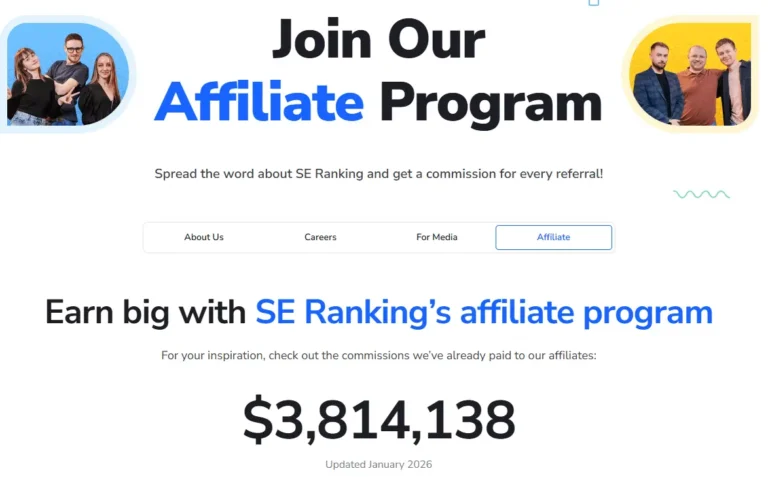
Let’s say you refer someone to a tool like SE Ranking, which charges around $65/month, and you earn 30% commission. That’s about $19.50 per month, per customer, for as long as they stay. Land 20 of those customers and you’ve got a recurring $390/month from a single product – without publishing another word. Curious about the exact terms? See our seranking affiliate program guide.
5. Build Your Email List From Day One
I can’t stress this enough: start collecting email addresses before you think you’re ready. Offer a free checklist, a mini-guide, a template — anything that gives someone a reason to hand over their email.
Your email list is the one asset that Google, TikTok, and Meta can’t take from you with an algorithm update. It’s also your fastest path to commission income once it grows past a few hundred subscribers.
6. Pick One Traffic Channel and Master It First
The number one mistake I see beginners make is trying to be everywhere at once. Blog. YouTube. TikTok. Pinterest. Twitter. They spread themselves so thin that nothing gets enough attention to actually work.
Pick one channel. Get to 500 daily visitors from it. Then — and only then — add a second channel. Depth beats breadth every single time, especially early on.
7. Update Your Older Content Regularly
Freshness is a real Google ranking signal. If you published an article six months ago and it’s hovering on page two, don’t just leave it there. Go back in, add new data, update examples, tighten the structure. Updated content regularly jumps one or two pages within weeks. Speeding It Up: Smart Tactics for Faster Wins
Mistakes That Kill Your Momentum (And How to Avoid Them)
I’ve watched many promising affiliate marketers fail. Not because they weren’t smart or hardworking — but because they fell into the same handful of traps. Here’s what to watch out for.
- Picking a niche you love without checking if anyone is trying to buy anything in it. Passion without buyer intent is just a hobby.
- Targeting keywords that are way too competitive for your site’s current authority. You’ll write great content that never ranks.
- Publishing one article a week — or less. In the early months, volume and consistency beat perfection. Publish often, then refine.
- Promoting ten different products at once. You end up going shallow on all of them. Pick one or two and go deep.
- Waiting to build your email list until you have “enough traffic.” That day keeps getting pushed back. Start the list now.
- Quitting between months 2 and 4. This is the “dark valley” of affiliate marketing — where most people give up right before the SEO starts to click.
- Ignoring the basics: proper title tags, meta descriptions, internal links, and a clear heading structure. These aren’t optional extras. They’re the foundation.
These aren’t optional extras. They’re the foundation. If you want the complete playbook beyond just speed — covering strategy, trends, and what top marketers are doing differently — read our guide on how to succeed in affiliate marketing
Why Your Personal Experience Is Now Your Biggest Competitive Advantage
In 2026, generic affiliate content doesn’t rank. Full stop.
Google’s E-E-A-T framework — Experience, Expertise, Authoritativeness, and Trustworthiness — has fundamentally shifted what gets rewarded. Articles that rehash what’s already on ten other websites are getting filtered out. What survives is content that proves the author actually lived the thing they’re writing about.
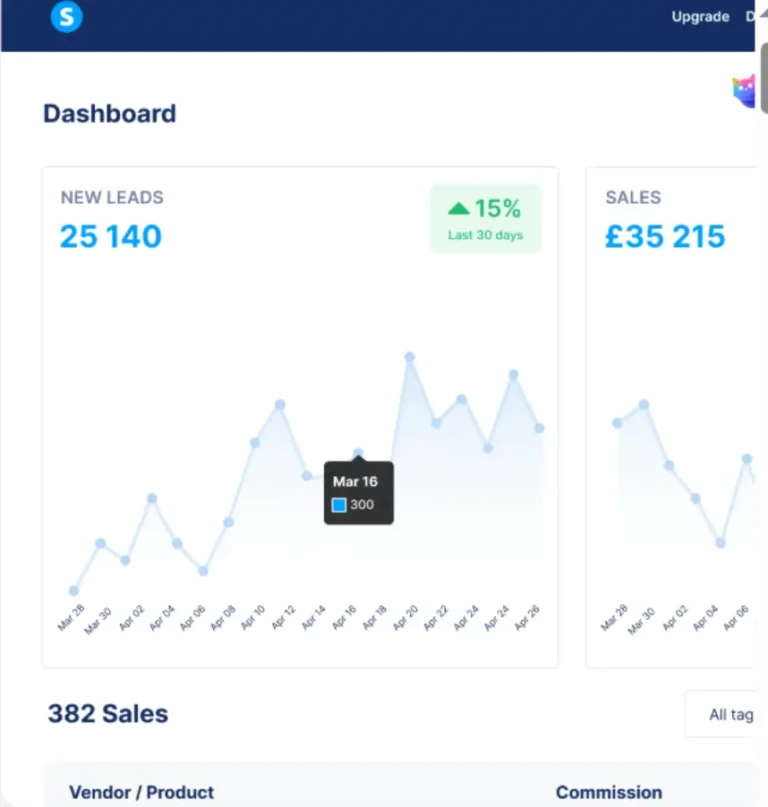
What does that look like in practice? It means showing a screenshot of your affiliate dashboard (with sensitive numbers blurred if you prefer). It means saying which specific tool you tried, what broke, and what you switched to. It means having a real author bio that connects your name to a real person with a real background.
This is actually great news for you. AI tools and content farms can’t replicate lived experience. Your story, your mistakes, your specific perspective — those are your moat.
Your story, your mistakes, your specific perspective — those are your moat. Want a deeper look at what’s actually working for top affiliates right now? Check out our full breakdown of affiliate marketing trends and strategies
How to Get Your Content Cited by AI Search (GEO Tips for 2026)
If you’ve noticed that Google is now showing AI-generated answers at the top of the search results — called AI Overviews — you’re probably wondering how to get your content included in those answers. That’s where Generative Engine Optimization (GEO) comes in.
The good news is that the same habits that make your content great for human readers also make it great for AI systems to pull from. A few specific practices help a lot:
- Open every H2 section with a single direct sentence that answers the implied question. AI systems love pulling those clean, declarative answers.
- Use tables and comparison formats wherever it makes sense. AI tools are excellent at extracting structured data.
- Write your FAQ section using the exact phrasing people use when they talk to AI tools — conversational, question-based, specific.
- Include key takeaways or summary boxes. These give AI systems a clean, quotable version of your main point.
- Keep your sentences punchy and declarative rather than flowing and literary. Precision beats eloquence when AI is reading your content.
Frequently Asked Questions
Can a beginner make money with affiliate marketing in their first month?
It’s possible but rare if you’re starting with a brand-new website. The more realistic timeline for an SEO-focused beginner is 3 to 6 months. If you already have an audience on another platform, the first month is very achievable.
How long does SEO take for affiliate marketing?
Brand-new websites typically take 3 to 6 months to rank for low-competition keywords, and 6 to 12 months to build consistent, meaningful traffic. This is why most successful affiliates treat SEO as a long-game investment — slow to start, but incredibly powerful once it’s rolling.
Can you do affiliate marketing without a website?
Yes — YouTube, TikTok, Pinterest, and email marketing all work without a website. But a blog gives you the most control over your audience, the best long-term income potential, and the most stable foundation for compounding SEO traffic. It’s worth building even if you start elsewhere.
Is affiliate marketing still worth starting in 2026?
Absolutely. The shift toward AI-assisted search has actually raised the bar for content quality, which hurts generic sites and helps affiliates who produce real, experience-based content. The market continues to grow, and there’s genuine room for creators who take quality seriously.
What’s the fastest traffic source for affiliate commissions?
Paid advertising is the fastest — you can have targeted visitors on an affiliate offer within hours. For free traffic, email marketing wins if you already have a list. After that, YouTube, then SEO.
Can I realistically make $100 a day with affiliate marketing?
Yes, but it typically takes 12 to 18 months of consistent work with SEO as your primary channel. With paid ads, it can happen faster, though profitability takes more testing. $100 a day ($3,000/month) is a realistic one-year target for someone who commits fully and makes smart early decisions.
What niches pay the highest affiliate commissions?
SaaS and software products consistently pay the highest rates — often 20 to 40% recurring. Web hosting, financial services, and online education are also strong. Physical product niches like Amazon Associates typically pay 1 to 8%, which means you need significantly more volume to reach the same income.
What’s the biggest mistake beginners make in affiliate marketing?
Giving up too early, usually between months 2 and 4. This period — before SEO kicks in but after the initial excitement fades — is where most people quit. The affiliates who push through to month 6 are the ones who end up with a real business.
So, How Fast Can You Make Money With Affiliate Marketing? Here’s the Real Answer.
If you’re starting with no audience and relying on SEO, expect 3 to 6 months to your first commission and 6 to 12 months to consistent income. That’s not slow — that’s actually building something real.
If you already have an audience somewhere, your first commission could be this week. Find a product your people genuinely need and create honest, helpful content about it.
If you’re willing to spend on paid ads, you could have commissions within 24 hours, but give yourself a testing budget and don’t measure success until you’re profitable, not just earning.
The affiliates who actually make it aren’t the ones who found a shortcut. They’re the ones who chose a focused niche, built real topical authority, treated their audience like intelligent adults, and showed up consistently for at least 12 months.
The question isn’t really “how fast.” It’s “how committed are you to doing this the right way?” Start today, build smart, and the commissions will follow.

Are you ready to take your affiliate marketing journey to the next level?
- Grab the Free “Affiliate Roadmap” by TechLife → From side hustle to steady income
- Use the same AI tools that helped me grow: Frase, Semrush, Systeme.io
- Join the TechLife community → Get tips, tools, and templates that work