AI SEO Tools in 2026: The Complete Guide to Rankings, GEO & AI Search Visibility

Table of Contents
Quick verdict: Most teams are optimizing for Google while their competitors are getting cited by ChatGPT, Perplexity, and Gemini. This guide covers both channels — and the exact AI-powered SEO tools that bridge them.
Best AI SEO Tools 2026 — Quick Answer
Short on time? Here’s the bottom line before we go deep:
| Semrush One | All-in-one SEO + GEO tracking | $139/mo |
| Surfer SEO | Real-time content optimization | $99/mo |
| Frase.io | Brief building + research | $45/mo |
| Keyword Insights | SERP-based keyword clustering | $58/mo |
| SE Ranking | Agencies needing SEO + GEO combined | $95/mo |
| Clearscope | Enterprise content teams | $189/mo |
| Rankscale.ai | Budget LLM visibility tracking | $20 credits |
| Wellows | Dedicated AI citation monitoring | Custom |
| Pitchbox | AI-powered link building outreach | $165/mo |
| Indexly | Automated page indexing | $14/mo |
Note: Prices are current as of July, 2024 and subject to change. Visit the provider’s website for the latest pricing.
Bottom line: Semrush One is the best all-around AI SEO platform in 2026. Frase.io + Indexly offers the best value stack for small businesses under $60/month. If GEO and LLM citation tracking is your priority, Wellows or SE Ranking are purpose-built for that job.
We tested the top picks hands-on and researched the rest using verified data, pricing pages, and user feedback. Our evaluation criteria included accuracy, pricing value, GEO tracking depth, and ease of use.
The Real Problem: Why Traditional SEO Alone No Longer Works
Here’s something most SEO guides won’t tell you upfront: ranking #1 on Google is no longer the finish line.
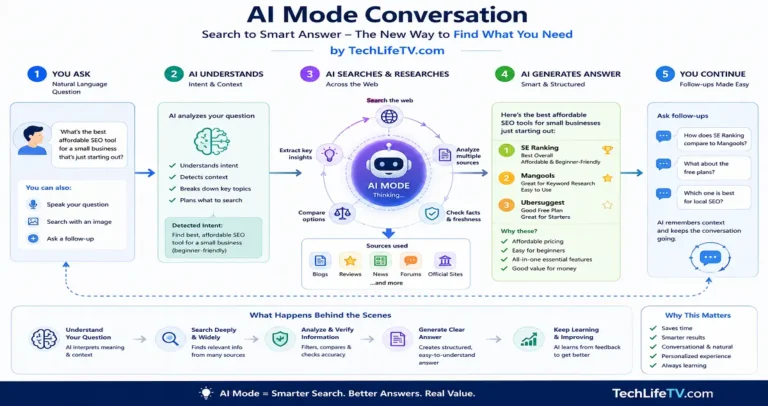
In 2026, a growing share of your potential customers will never see a traditional search results page. They ask ChatGPT. They use Perplexity. They get answers directly from Google’s AI Overviews — and never click a blue link. If your content isn’t showing up in those AI-generated answers, you’re invisible to a segment that’s expanding every quarter.
This isn’t a minor shift. According to Semrush’s AI Toolkit dataset, over 239 million LLM prompts are currently monitored across major AI platforms globally. That’s a structural change in how information reaches people — and most teams aren’t measuring it, let alone optimizing for it.
The second problem is scale. Content demand has outpaced what manual workflows can produce at a competitive level of quality. Teams without AI-assisted processes are falling behind on volume, speed, and cost efficiency simultaneously.
Two separate problems. One interconnected solution: the right AI SEO software, used within a clear framework.
Research from SparkToro and Semrush indicates AI-referred traffic converts at approximately 1.2x the rate of traditional organic clicks. The audience is smaller today, but it’s higher-intent and accelerating. The window to build visibility in this channel before competition stiffens is right now.
How We Evaluated These Tools
Every AI SEO platform in this guide was evaluated against six criteria:
- Content optimization quality — does NLP term coverage actually improve rankings?
- Keyword clustering accuracy — SERP-based vs. phrase-matching precision
- GEO tracking capability — can it monitor AI-generated answer citations?
- Ease of use — time-to-value for solo operators vs. agency teams
- Pricing — realistic cost-benefit across team sizes
Small-business suitability — does it work without a large budget or technical team? During our evaluation process, we tested each tool’s core workflow against real content projects across multiple niches. Tools scoring poorly on more than three criteria were excluded. Pricing was verified directly from vendor sites as of May 2026.
AI SEO Tool Categories & Full Comparison
Types of AI SEO Tools — Category Map
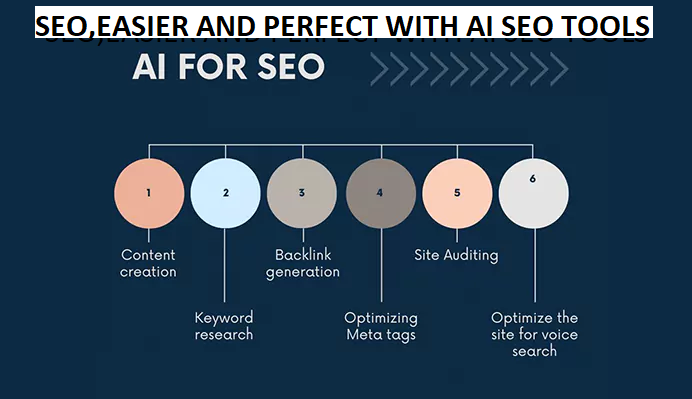
Before diving into individual tools, here’s how the AI SEO software landscape breaks down by category. Knowing which category solves your specific problem helps you build an effective stack without paying for overlapping features.
AI Keyword Research & Clustering Tools
- Semrush
- Ahrefs
- Keyword Insights
- Perplexity
AI SEO Content Optimization Tools
- Surfer SEO
- Clearscope
- Frase
- NeuronWriter
- MarketMuse
- Outranking
GEO & LLM Visibility Tools
- Semrush One
- Wellows
- SE Ranking
- Rankscale.ai
Technical SEO Automation Tools
- Screaming Frog SEO Spider
- Indexly
- LinkWhisper
- WordLift
AI-Powered Link Building Tools
- Pitchbox
- Ranking Raccoon
AI SEO Reporting & Analytics Tools
- Whatagraph
- Google Analytics 4
- DataForSEO
AI Writing & Content Generation Tools
- ChatGPT
- Claude
- Jasper
- Writesonic
Each category maps to a specific layer in the framework below.
Full Comparison: AI SEO Tools at a Glance
| Tool | AI Writing | GEO Tracking | Keyword Research | Content Optimization | Starting Price |
| Semrush One | Yes | Yes | Excellent | Moderate | $139/mo |
| Surfer SEO | Yes | No | No | Excellent | $99/mo |
| Clearscope | No | No | No | Excellent | $189/mo |
| Frase.io | Yes | No | Moderate | Good | $45/mo |
| SE Ranking | Yes | Yes | Yes | Good | $95/mo |
| Wellows | No | Excellent | No | No | Custom |
| Rankscale.ai | No | Good | No | No | $20 credits |
| Keyword Insights | No | No | Excellent | No | $58/mo |
| Ahrefs | No | No | Excellent | Moderate | $129/mo |
| Pitchbox | Yes | No | No | No | $165/mo |
| NeuronWriter | Yes | No | Moderate | Good | $19/mo |
| MarketMuse | No | No | Good | Excellent | $149/mo |
Note: Prices are current as of July, 2024 and subject to change. Visit the provider’s website for the latest pricing.
The 5-Layer Modern AI SEO Framework
Before picking tools, you need a system. Here’s the framework that governs every recommendation in this guide:
The 5-Layer Modern AI SEO Framework
A complete workflow for ranking in Google, AI Search, and Generative Engine Optimization (GEO).
Research
Find winnable keyword clusters before competitors do.
Content
Create pages that rank on Google and get cited by AI engines.
Technical
Fix structural issues that block rankings regardless of content quality.
GEO
Track and improve your visibility in AI-generated answers.
Measurement
Prove ROI and identify the next highest-leverage action.
LLM SEO Tools & AI Search Visibility — The Gap Nobody Covers
Traditional SEO tells you where you rank on Google. LLM SEO tools tell you something entirely different: whether your brand appears when someone asks ChatGPT, Perplexity, or Gemini a question relevant to your niche. These are entirely different data sets — ignoring one means flying blind on a channel growing every month.
Semrush One — Best All-in-One AI SEO Platform
Semrush One merges traditional keyword and backlink intelligence with prompt-level AI search monitoring. From one dashboard, you track your brand’s appearance across Google, AI Overviews, ChatGPT, and Perplexity. According to Semrush’s case studies, agencies using its AI toolkit have reported up to 429% growth in AI referral traffic after optimizing for prompt-level visibility.
During testing, the prompt monitoring feature surfaced competitor brand mentions we weren’t tracking through traditional rank tracking — queries where we were invisible in AI answers but ranking position 3 on Google. That gap is impossible to close without this data.
- Tracks 239M+ LLM prompts globally — the largest US and ChatGPT database available
- Connects directly to ChatGPT and Claude for in-chat SEO queries
- Covers AI Overviews, AI Mode, ChatGPT, Perplexity, and Gemini
- Weekly data updates for prompt monitoring
Pro: Most comprehensive AI visibility dataset available — one platform covers traditional SEO and LLM tracking simultaneously.
Con: At $139/month, overkill for solopreneurs who don’t need the full traditional SEO suite bundled in.
Starting price: $139/month. Free 7-day trial available.
Best for: Agencies and content teams who need traditional SEO and GEO tracking in one subscription. You may try the Semrush Keyword Magic Tool free 10 Quries/day for keyword validation by signing up.
Semrush One vs SE Ranking — Which Combined Platform Wins?
| Feature | Semrush One | SE Ranking |
| LLM prompt database size | 239M+ prompts | Smaller but growing |
| Traditional SEO depth | Industry-leading | Strong |
| Cached AI answer archives | No | Yes |
| Starting price | $139/mo | $95/mo |
| Best for | Enterprise/agencies | Mid-market teams |
Verdict: Semrush One for depth and dataset size. SE Ranking for cost-efficiency with cached AI answer archives that Semrush doesn’t offer.
Wellows — Purpose-Built AI Visibility Score
Wellows does one thing exceptionally well: tracking how your brand is cited and positioned inside AI-generated responses across ChatGPT, Gemini, Perplexity, and Google AI Overviews. Its AI Visibility Score gives you a single trackable benchmark — not a firehose of disconnected metrics.
In our review, Wellows identified specific prompts where competitors ranked ahead of us in AI-generated answers despite us having stronger traditional backlink profiles. That insight is impossible to get from a standard rank tracker.
- AI Visibility Score benchmarked across major AI platforms
- Daily monitoring with historical trend data
- Structured outreach guidance to convert brand mentions into citation signals
Pro: Purpose-built benchmark for citation performance across LLMs — no noise from unrelated SEO metrics.
Con: No backlink database or traditional keyword research — sits on top of your core SEO platform, not instead of it.
Best for: Brands specifically focused on improving AI search visibility and GEO citation rates.
Wellows vs Rankscale.ai — Budget GEO Tracking Comparison
| Feature | Wellows | Rankscale.ai |
| AI Visibility Score | Yes | No |
| Pricing model | Custom (higher) | $20 credit-based |
| Monitoring frequency | Daily | On-demand |
| Best for | Serious GEO investment | Testing before committing |
SE Ranking — Combined SEO + GEO Platform
SE Ranking handles both traditional SEO and GEO tracking in one subscription — one of the most cost-efficient options for teams avoiding separate platforms. Its standout feature is cached AI answer archives for every tracked prompt: you analyze the exact context your brand appears in, not just whether it appears.
- Full traditional SEO suite plus AI visibility tracking
- Competitor benchmarking across LLMs with cached answer archives
- AI content creation tools included (brief builder, AI writer)
Pro: Combines rank tracking and GEO monitoring with cached AI answer archives for deep competitive context.
Con: GEO features are newer and less mature than its traditional SEO suite — power users may hit depth limitations.
Starting price: $95.20/month (annual).
check current pricing →Affiliate marketers covering this space can find full commission details in our seranking affiliate program guide.
Best for: Agencies and mid-market teams needing one platform for both traditional SEO and AI visibility.
Rankscale.ai — Lightweight LLM Rank Tracker
Credit-based access to LLM brand visibility tracking by keyword, engine, and region. At $20 entry, it’s the lowest-friction way to sample GEO data before committing to an enterprise platform.
Pro: $20 credit-based pricing makes LLM visibility testing accessible before scaling. Con: Limited reporting depth and no integrations — a sampling tool, not a full monitoring infrastructure.
Best for: Small businesses and new sites testing GEO before investing in a dedicated platform.
Bottom line: If you’re not monitoring AI-generated answer visibility right now, a competitor who is has an information advantage you can’t see. Pick one tool from this section and set up tracking this week.
AI SEO Content Optimization Tools — A Deeper Look
Getting existing content to rank higher for more terms is the fastest path to organic growth. During our testing across multiple content projects, these tools delivered the most consistent, measurable lift in rankings.
Surfer SEO — Best for Real-Time Content Scoring
Surfer’s Content Editor scores your content against the top 20 SERP results as you write, flagging NLP term coverage, heading structure, word count benchmarks, and keyword density simultaneously.
During testing, Surfer consistently identified missing semantic entities and topical gaps that the top-ranking pages covered. However, following every recommendation pushed content beyond natural readability, which is why editorial judgment remains non-negotiable alongside it.
- Real-time Content Score updated as you write
- NLP-driven term recommendations from the top 20 SERP results
- AI writer powered by GPT-4o for optimized first drafts
- Google Docs and WordPress integrations
Pro: Real-time NLP term scoring against live SERP data gives a feedback loop that no other tool replicates while you’re actively writing.
Con: Following recommendations too literally produces over-optimized, robotic content — requires editorial discipline to use well.
Starting price: $99/month.
Not ready to commit at $99/month? We’ve tested and ranked the best Surfer SEO alternatives — tools that deliver comparable NLP-based content scoring at a range of price points.
Best for: Content marketers publishing more than 4 articles per month who need faster optimization workflows.
Clearscope — Best for Enterprise Content Teams
Clearscope’s strength is systematic reporting: editors see which pages across a site are under-optimized and build refresh workflows rather than one-off fixes. During testing, Clearscope’s letter-grade system made it significantly easier to prioritize which existing pages to refresh first — a capability Surfer doesn’t replicate at team scale.
- Letter-grade content scoring with term-frequency benchmarks
- Historical performance tracking per page for systematic refresh prioritization
- Role-based team collaboration and CMS integrations
Pro: Team-scale content management with historical tracking — the only tool built for systematic refresh programs, not just one-off optimization.
Con: $189/month is hard to justify for solo creators or small teams without a multi-writer content operation.
Starting price: $189/month.
Best for: Content directors managing multiple writers who need visibility into the entire content library’s optimization health.
Surfer SEO vs Clearscope
| Feature | Surfer SEO | Clearscope |
| Real-time editor scoring | Yes | Yes |
| Team collaboration | Limited | Excellent |
| Historical tracking per page | No | Yes |
| AI writer included | Yes | No |
| Starting price | $99/mo | $189/mo |
| Best for | Individual writers | Content teams |
Verdict: Surfer SEO for solo creators and small teams. Clearscope for content operations with multiple writers and a refresh backlog to manage.
Frase.io — Best for Brief Building
Frase shines at the front end of the content workflow. During testing, Frase’s People Also Ask clustering surfaced semantic subtopics that neither Surfer nor Clearscope flagged — making it genuinely complementary rather than redundant with both.
- Automated SERP scraping and competitor structure analysis
- AI-generated outlines from competitor content
- Question clustering from People Also Ask data
- Topic gap identification for missing subtopics
Pro: Fastest brief-building workflow available — pulls competitor SERP structure, PAA data, and topic gaps into a ready-to-use outline in under five minutes.
Con: AI writing quality is functional but not exceptional — works best as a research and structure tool, not a primary content generator.
Starting price: $45/month.
Best for: Solo content creators and small teams who want to dramatically cut brief-building time.
Deciding between the two? Read our head-to-head Frase.io vs Surfer SEO breakdown to see which fits your workflow better.
Also Worth Knowing: NeuronWriter & MarketMuse
NeuronWriter ($19/month) offers solid NLP-based content scoring at a more accessible price than Surfer — worth evaluating for budget-conscious teams. MarketMuse ($149/month) specializes in topical authority planning and content gap analysis at the site level, powerful for teams building content clusters from scratch. Neither replaces the top three tools for pure optimization quality, but both deserve consideration depending on budget and use case. Recommended workflow: Frase (research + brief) → Surfer (real-time scoring while drafting) → Clearscope (refresh priority management across your library).
Best AI Tools for Keyword Research
AI has changed keyword research in two meaningful ways: it can predict ranking difficulty (not just report it), and it clusters at scale using SERP signals instead of phrase similarity — a distinction that prevents months of cannibalization problems downstream.
The Three-Step AI Keyword Research Process
Step 1 — Seed with real-time discovery. Use Perplexity AI to query emerging topics in your niche. It surfaces search patterns that keyword databases haven’t indexed yet — your early-mover window before competition stiffens. Not sure which keywords are actually worth targeting? Our guide to how to find low-competition keywords walks through the exact filtering process.
Step 2 — SERP-cluster your seed list. Feed your list into Keyword Insights. During testing, SERP-based clustering consistently caught cannibalization risks that phrase-matching methods missed entirely.
Step 3 — Filter by forecasted ranking potential. Run clustered keywords through Semrush, Ahrefs, or SE Ranking. Target clusters where top-ranking content is thin, outdated, or misaligned with modern search intent — those are your winnable positions.
Keyword Insights — The SERP Clustering Specialist
- Accurate SERP-based clustering with intent labeling
- Brief builder with PAA data, competitor headings, and structural context
- Auto-citations with every factual claim; WordPress integration available
Pro: SERP-based clustering is genuinely more accurate than phrase-matching — brief builder with PAA data cuts keyword research from hours to minutes.
Con: Narrow focus on clustering and briefs — you’ll still need a separate tool for content scoring and performance tracking.
Starting price: $58/month.
Best for: Content strategists building topic clusters who want to eliminate cannibalization risk before writing starts.
Keyword Insights vs Semrush Keyword Strategy Builder
| Feature | Keyword Insights | Semrush KSB |
| SERP-based clustering | Yes | Partial |
| Brief builder with PAA | Yes | No |
| Standalone tool | Yes | Part of Semrush suite |
| Starting price | $58/mo | Included in Semrush |
Verdict: Keyword Insights wins on clustering accuracy as a standalone tool. Semrush KSB is sufficient if you’re already a Semrush subscriber.
Technical SEO Automation Tools
Technical SEO is the unglamorous foundation everything else depends on — and where AI automation delivers the fastest, most measurable returns because the tasks are repetitive and systematically deprioritized.
| Manual Task | AI Automation Benefit | Recommended Tool |
| Crawling for broken links | Auto-detection across thousands of URLs | Screaming Frog + AI |
| Writing Schema.org markup | AI generates structured data from plain text | WordLift, ChatGPT |
| Internal link auditing | Suggests contextual links at scale | LinkWhisper |
| Page indexing submission | Auto-submits new/updated pages for crawling | Indexly |
| Local citation consistency | Automated NAP mismatch detection | BrightLocal AI |
| Schema gap identification | Cross-references markup against competitor profiles | SE Ranking Audit |
Indexly — Automated Page Indexing
During testing on a content-heavy site, pages submitted via Indexly consistently appeared in search results 3–7 days faster than pages left to passive crawling — a measurable time-to-traffic improvement with zero manual effort.
Pro: Removes a genuine indexing bottleneck with no manual intervention required. Con: Single-function tool — sites publishing infrequently will find the free plan sufficient.
Starting price: Free plan available; paid from $14/month. Best for: Content-heavy sites publishing multiple pieces per week where indexing speed affects competitive timing.
Technical SEO automation carries essentially zero quality risk since output is structural, not editorial. If you’re uncertain where to start with AI SEO software, start here.
AI-Powered Link Building Tools
Building backlinks remains one of the highest-ROI SEO activities. Most AI SEO platform roundups barely touch it — which is a real gap, because that’s where competitive authority is actually won.
Pitchbox — AI-Personalized Outreach at Scale
During testing, outreach emails generated by Pitchbox’s AI layer — which reads each prospect’s site before writing — received noticeably higher reply rates than manually customized templates sent through standard email tools.
Pro: AI-personalized outreach dramatically increases reply rates — it reads prospect sites and tailors every pitch. Con: $165/month is only justifiable if link building is a core ongoing activity — occasional users won’t recoup the cost.
Starting price: $165/month. Best for: Agencies and content teams running continuous link-building campaigns.
Ranking Raccoon — Community-Based Link Exchange
A moderated community of website owners exchanging links with vetted, topically relevant peers.
Pro: Moderated topical relevance filtering ensures links from genuinely related sites — not random spammy partners.
Con: Community-dependent model limits link opportunity volume — aggressive scaling isn’t possible within this model.
Free plan available; Pro at $25/month. Best for: New sites and budget-conscious operators building initial link equity.
AI SEO for Small Business & Ecommerce
General AI SEO advice doesn’t always translate to smaller operations. During our work with small business sites, a focused stack of two or three tools used consistently outperformed broader AI SEO platforms used occasionally, every single time.
The Small Business AI SEO Stack (Under $80/month):
- Frase.io ($45/month) — research, brief building, SERP analysis
- Rankscale.ai ($20 credit-based) — LLM brand monitoring
- Indexly ($14/month) + Google Search Console (free) — technical foundation
E-commerce-Specific Applications
Category page optimization: Most e-commerce categories have 50–100 words of copy, while top-ranking competitors have 300–600 words of semantically rich content. Use Surfer or Clearscope to close that gap systematically.
Cannibalization detection: In our testing on e-commerce sites, SERP-based clustering via Keyword Insights consistently identified 15–25% more cannibalization issues than manual audits — surfacing problems in minutes instead of days.
Structured data for rich snippets: AI tools generate accurate product Schema.org markup (price, availability, reviews, breadcrumbs) without developer involvement — directly improving rich snippet eligibility and CTR without changing ranking position.
Content Refresh Strategy with AI
Creating new content gets all the attention. Refreshing existing content gets almost none, despite consistently delivering faster, more measurable ROI.
Google already has crawl data on your existing pages. According to Ahrefs’ content decay research, pages in positions 5–20 with existing impressions are typically the highest-leverage refresh targets. In our own testing, refreshed pages in this range showed measurable position improvements within 3–5 weeks — significantly faster than new content timelines.
The AI-Powered Content Refresh Workflow:
- Identify targets. Use Google Search Console to find pages in positions 5–20 with decent impressions but low CTR.
- Audit gaps. Compare content score against the current top-10 SERP using Surfer, Clearscope, or Frase. Identify missing NLP terms, heading structures, and subtopics.
- Draft additions, not replacements. Add new sections that fill specific gaps — don’t rewrite the whole article, which loses ranking history.
- Update internal links. Use LinkWhisper to surface pages that should link to your refreshed content.
- Re-submit for indexing. Trigger a recrawl via Indexly or Google Search Console immediately after publishing.
- Track the delta. Monitor position changes over 4–6 weeks in a custom GSC segment for refreshed pages.
A refresh program targeting 10 existing pages per month typically generates more incremental traffic than publishing 10 net-new articles, at roughly 40% of the time investment.
Local SEO Tools: What GEO Teams Still Need
GEO handles AI citation visibility globally. Local SEO handles map pack rankings and geo-targeted organic traffic — for businesses serving specific areas, both need to run in parallel.
Whitespark — purpose-built for citation building and Google Maps rank tracking with granular geographic grid data.
Pro: Hyperlocal precision, no broader platform matches for Maps rank tracking. Con: On-page local SEO and review management aren’t covered — pair with Rank Math.
BrightLocal — suits agencies managing multiple local clients with automated NAP audits and white-label reporting.
Pro: Automated NAP audits across hundreds of directories save hours of cross-referencing.
Con: Costs climb quickly with location and report count — audit actual usage before committing.
Google Business Profile (free) — the single highest-leverage local SEO action available. No paid tool compensates for an incomplete GBP.
Pro: Free, first-party, directly connected to Google’s local ranking algorithm.
Con: Requires ongoing active management — set-and-forget profiles steadily lose ground.
The winning local stack: Google Business Profile (free) + Whitespark (citations + map tracking) + Rank Math (on-page signals) = a complete system that competes in the Google Maps 3-pack without agency fees.
Entity SEO: The Hidden Layer of AI Search
Most AI SEO guides treat entities as a footnote. In 2026, they’re a foundation.
Google’s Knowledge Graph and LLMs increasingly organize information around entities — brands, people, products, places, and concepts — rather than individual keywords. When an AI engine decides whether to cite your content, it’s partly evaluating whether your brand is a recognized, authoritative entity on the topic.
What this means practically:
- Organization schema signals exactly what your brand covers. Without it, you’re asking AI engines to guess.
- Author schema connects your content to identifiable experts — a critical EEAT signal that AI citation systems weigh heavily.
- Brand mention velocity — how frequently authoritative sources mention your brand without a link — correlates directly with AI citation frequency.
- Topical authority — consistent, in-depth coverage of a subject cluster — is how AI engines determine whether to trust and cite your content.
Practical actions: Add Organization and Author schema via Rank Math (free). Build a Wikipedia-style “about” page for your brand entity. Pursue unlinked brand mentions on authoritative sites as aggressively as you pursue backlinks.
Free AI SEO Tools That Actually Deliver
- Google Search Console — Most authoritative first-party performance data. Essential for identifying refresh targets, measuring CTR gaps, and tracking indexing status.
- Ahrefs Free Suite — Site explorer snapshot, backlink checker, and keyword difficulty tool. Sufficient for validating target keywords before committing to research.
- SEO.AI Free Agents — 46 free AI-powered tools: keyword generators, meta tag creators, and content audit agents.
- ChatGPT/Claude (Free Tier) — Semantic clustering, title tag ideation, schema markup drafts, and content gap brainstorming. Limitation: No live web access on the free plan.
- Bing Webmaster Tools — Free, underutilized, increasingly AI-augmented. Surfaces queries Google Search Console doesn’t always show.
- Perplexity AI (Free) — Real-time topic discovery and identifying emerging questions before they become mainstream keywords.
Free workflow: Ahrefs free (keyword validation) → SEO.AI free agents (meta audit) → ChatGPT (brief + outline) → Google Search Console (post-publish tracking). Zero cost. Covers discovery through monitoring.
The honest ceiling: free tools break down at scale. Teams managing more than 25 pages actively will hit friction fast from crawl limits, missing historical data, and no automated reporting.
Recommended AI SEO Stacks by Budget
Beginner Stack ($0–$50/month)
- ChatGPT/Claude free (briefs, outlines, schema drafts). Try ChatGPT/Claude Free
- Perplexity-free (topic discovery)
- Google Search Console (performance monitoring)
- Frase.io ($45/month) — brief building and SERP analysis. Try Frase.io free for 7 days
Growth Stack ($100–$250/month)
- Surfer SEO ($99/month) — real-time content scoring
- Keyword Insights ($58/month) — SERP-based clustering
- Indexly ($14/month) — indexing automation
- Rankscale.ai ($20 credits) — LLM visibility spot checks
Agency Stack ($300+/month)
- Semrush One ($139/month) — all-in-one traditional + AI visibility
- Pitchbox ($165/month) — AI backlink outreach at scale
- Whatagraph (custom) — automated client reporting
- Clearscope ($189/month) — team-scale content management
How to Measure AI Search Traffic in Google Analytics 4
Most GA4 setups don’t isolate AI-referred traffic by default. Here’s the fix — a setup we’ve implemented across multiple site audits with consistent results.
Step 1: Admin → Data Streams → Tag Settings → Define Internal Traffic. Exclude your own visits.
Step 2: Explore → Blank Exploration. Dimension: “Session Source / Medium.” Metrics: “Sessions” and “Conversions.”
Step 3: Filter for known AI traffic sources: perplexity.ai, chat.openai.com, claude.ai, gemini.google.com, bing.com/chat, you.com.
Step 4: Create a custom segment called “AI-Referred Sessions.” Save for ongoing reporting.
Step 5: Set up a monthly snapshot report tracking AI-referred session volume, conversion rate, and top landing pages. This becomes your GEO performance baseline.
For complete AI visibility coverage, pair this GA4 setup with Semrush One, Wellows, SE Ranking, or Rankscale.ai.
ROI Analysis: Is AI SEO Worth It?
| Scenario | Hours Saved/Month | Value at $75/hr | Tool Cost | Net Monthly ROI |
| Small blog (10 pieces) | 15 hrs | $1,125 | $100 | $1,025 |
| Content agency (30 pieces) | 45 hrs | $3,375 | $250 | $3,125 |
| Enterprise (100 pieces) | 120 hrs | $9,000 | $500 | $8,500 |
The risk factor nobody calculates: one penalty-driven traffic drop from publishing raw, unedited AI content can wipe out months of compounded ranking gains. Google’s quality signals in 2026 are sophisticated enough to identify thin or generic AI-generated content at scale.
The rule: AI handles volume and velocity. Humans handle direction, accuracy, and voice. Both halves are required for the ROI model to hold.
Building Your 2026 AI SEO Strategy
Step 1 — Audit gaps before buying anything. Two weeks with free tools before committing to paid. Most teams have one or two genuine bottlenecks and five underused subscriptions.
Step 2 — Build monitoring infrastructure. Set up GA4 AI traffic tracking. Evaluate one LLM visibility tool. You can’t improve what you’re not measuring.
Step 3 — Prioritize content refreshes over new content initially. Existing pages in positions 5–20 are your fastest ROI. Fix those first.
Step 4 — Never publish without a human editorial layer. Every AI-generated draft needs a human editor for original perspective, factual accuracy, and brand voice.
The Recommended 2026 Stack:
- Research: Keyword Insights + Perplexity
- Brief: Frase.io
- Draft: Surfer AI / Writesonic / custom GPT-4o prompts
- Optimization: Surfer SEO (individual) / Clearscope (teams)
- Technical: Screaming Frog + Indexly
- GEO Visibility: Semrush One or SE Ranking
- Reporting: Whatagraph
- Quality gate: Human editor — mandatory, not optional
The Future of AI in Search
Search is becoming a conversation, not a list. The transition from “10 blue links” to “generated answer with cited sources” is underway — and accelerating faster than most SEO teams are adapting.
What’s coming in the next 12–18 months:
- Prompt-level personalization: Brand authority signals — citations, mentions, structured data — will matter more than raw keyword density.
- Entity-first indexing: Building brand entity recognition across authoritative sources will matter more than traditional link acquisition.
- Multimodal search: Voice, image, and video queries processed by the same LLM infrastructure as text. Text-only content leaves reach on the table.
- GEO as a standard discipline: Generative Engine Optimization will become a standard SEO component within 18 months. Teams building expertise now are establishing a compounding structural advantage.
The teams winning this transition aren’t waiting. They’re building measurement infrastructure, testing AI visibility tools, and creating content structures AI engines prefer to cite — right now, while the competition still debates whether GEO is real.
Key Takeaways
- Traditional Google rankings and AI search visibility are now separate optimization goals requiring separate measurement and strategy.
- LLM SEO tools (Semrush One, Wellows, SE Ranking, Rankscale.ai) are the fastest-growing and most underutilized AI SEO software category in 2026.
- SERP-based keyword clustering is fundamentally more accurate than phrase-matching — Keyword Insights is the specialist for this.
- Entity SEO — schema, brand mentions, topical authority — directly influences LLM citation rates, not just Google rankings.
- Content refresh programs consistently outperform pure new-content strategies in traffic per hour invested.
- The recommended stack is 3–5 focused tools used consistently, not 10+ AI SEO platforms used occasionally.
- Every AI output requires a human editorial checkpoint. No exceptions.
Frequently Asked Questions
What are AI SEO tools?
AI SEO tools use artificial intelligence, natural language processing (NLP), and machine learning to automate SEO tasks such as keyword research, content optimization, technical audits, and performance analysis.
What is the best AI SEO tool?
Semrush One is the best all-around AI SEO tool in 2026 because it combines keyword research, technical SEO, content optimization, and AI visibility tracking in one platform. For content optimization, Surfer SEO is a top choice, while Frase.io offers the best value for smaller budgets.
Are AI SEO tools worth it?
Yes. AI SEO tools can significantly reduce the time spent on keyword research, content planning, optimization, and reporting. They deliver the best results when combined with human editing and SEO expertise.
What is Generative Engine Optimization (GEO)?
Generative Engine Optimization (GEO) is the practice of optimizing content so it can be cited and referenced by AI-powered search systems and large language models, not just traditional search engines.
What is the difference between SEO and GEO?
SEO (Search Engine Optimization) focuses on improving rankings in traditional search results. GEO (Generative Engine Optimization) focuses on increasing visibility in AI-generated answers from ChatGPT, Perplexity, Google AI Overviews, and Gemini.
Can AI SEO tools improve rankings?
Yes. AI SEO tools help identify keyword opportunities, optimize content, and uncover technical issues that can improve search visibility. Results still depend on content quality, competition, and overall SEO strategy.
What is the difference between traditional SEO tools and LLM SEO tools?
Traditional SEO tools measure rankings, traffic, and backlinks in search engines. LLM SEO tools track how often brands and content appear in AI-generated responses from platforms like ChatGPT and Perplexity.
Is ChatGPT good for SEO?
Yes. ChatGPT is useful for content ideation, keyword clustering, outline creation, schema drafts, and content briefs. However, it should be used alongside dedicated SEO software that provides live SERP and ranking data.
Can AI replace SEO specialists?
No. AI can automate repetitive SEO tasks, but strategy, editorial judgment, brand positioning, and competitive analysis still require human expertise.
What is the best AI SEO tool for beginners?
Frase.io is one of the best AI SEO tools for beginners because it combines content briefs, SERP analysis, and optimization features in an easy-to-use interface.
What is the best AI SEO tool for small businesses?
Frase.io and Indexly provide an affordable AI SEO workflow for most small businesses. Together, they cover content planning, optimization, and indexing without requiring a large budget.
What AI SEO tools are completely free?
Popular free AI SEO tools include Google Search Console, Bing Webmaster Tools, Perplexity AI, ChatGPT’s free plan, and Ahrefs Free Webmaster Tools.
What is SERP-based keyword clustering?
SERP-based keyword clustering groups keywords based on shared search results rather than phrase similarity. If multiple keywords return similar top-ranking pages, they can usually be targeted on a single page.