AI SEO Tools: How AI Is Transforming SEO for Faster Rankings
Quick Summary (Read This First)
If SEO feels frustrating right now, you’re not imagining it.
You publish content. You follow the rules. You wait.
And still—no rankings, no traction, no real momentum.
AI SEO tools exist for one simple reason: traditional SEO has become too slow, too manual, and too uncertain for small teams.
In this guide, you’ll learn what AI SEO tools actually do, why they’ve become essential, and how beginners, small businesses, and affiliates are using them to gain visibility, build trust, and scale—without massive budgets or full-time SEO teams.
This isn’t about shortcuts or easy fixes.
It’s about clarity.
Table of Contents
Let’s look at how the landscape has shifted—and why that matters for you.
SEO didn’t suddenly become impossible.
It evolved.
Search engines no longer look at pages the way they used to. Keywords still matter, but they’re no longer the main event. Today, search engines evaluate intent, context, behavior, and how well your content actually helps someone.
That shift quietly broke a lot of old SEO advice.
And that’s exactly where AI SEO tools come in.
If you’re a small business owner doing SEO between client calls, a blogger publishing consistently but stuck on page two, an affiliate marketer focused on conversions (not vanity traffic), or a beginner overwhelmed by “advanced” SEO frameworks—you’re not behind.
You’re just playing a smarter game with older tools.
AI doesn’t replace SEO fundamentals.
It removes the guesswork that used to waste months of time.
What AI SEO Tools Really Mean (Without the Buzzwords)
AI SEO tools use artificial intelligence to analyze, predict, and improve your website’s performance in search engines.
That sounds abstract. Let’s make it practical.
Before AI, SEO often meant:
- Guessing keywords
- Copying competitors
- Publishing content and hoping
- Fixing problems after rankings dropped
AI flips that process.
- Instead of guessing, you have direction.
- Instead of reacting, you act proactively.
AI SEO tools help you understand what to create, how to structure it, what’s missing from your site, and why certain pages perform while others don’t.
The simplest way to think about it:
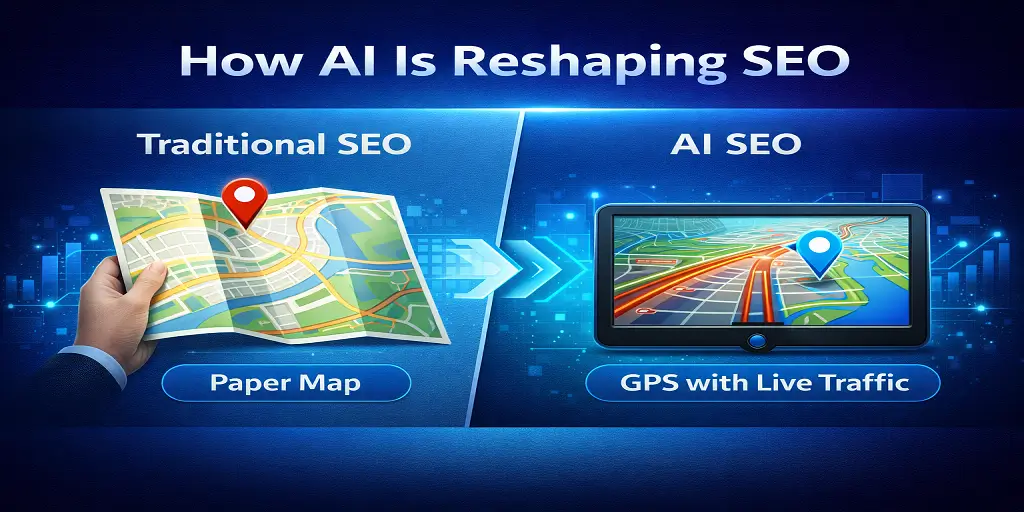
- Traditional SEO is driving with a paper map.
- AI-driven SEO uses live navigation with traffic updates.
You’re still in control.
AI just helps you avoid dead ends.
Why AI SEO Is No Longer Optional
Here’s the uncomfortable truth most people avoid saying out loud.
Publishing more content doesn’t guarantee better rankings anymore.
The real reasons pages fail to rank usually come down to three things:
- Search engines don’t fully understand your site.
- Users don’t trust it yet.
- Your content doesn’t perfectly match the intent.
AI SEO tools are built to solve these exact problems.
They help align your content with real search intent, build topical depth instead of isolated posts, and optimize pages before you hit publish—not months later when rankings stall.
For low-budget creators, this is a game-changer.
Instead of wasting time on trial and error, AI helps you focus on pages that actually matter, avoid weak topics, and build authority faster than brute-force publishing ever could.
This is how visibility turns into trust.
And trust turns into revenue.
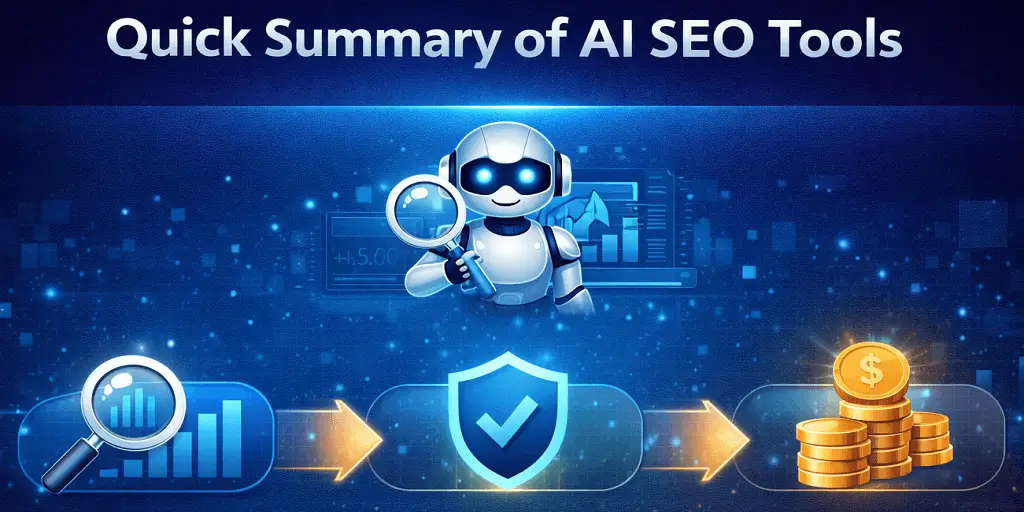
- That’s visibility → trust → revenue in action.
How SEO Quietly Changed (And Why AI Fits Naturally)
SEO used to reward what you said.
Now it rewards the quality of your answers.
Search engines analyze:
That’s not speculation—that’s how modern algorithms work.
- Page structure
- Content depth
- Engagement
- Internal linking
- Signals of real expertise.
SEO itself is already driven by machine learning.
AI SEO tools simply help you see what search engines are already evaluating, but at a speed no human can match consistently.
They don’t replace thinking.
They sharpen it.
Why This Matters If You’re Not an “SEO Expert”
Understanding modern search engine algorithms and machine learning helps you create content that ranks even without deep technical SEO knowledge.
Search engines don’t rely on static rules anymore.
They learn from:
- Clicks behavior
- Dwell time
- Query patterns
- Content relationships.
Rankings shift based on patterns, not checklists.
This is machine learning, and it means:
- Ranking factors change dynamically.
- One-size-fits-all SEO fails.
- Surface-level optimization doesn’t last.
AI-powered SEO tools analyze these patterns faster than any human can.
They help you understand:
- Why does a page rank?
- Why doesn’t another
- What’s missing—not what’s popular
That’s a massive advantage for a small team. Next, let’s break down the key benefits of using AI in SEO and how those benefits connect directly to your audience’s pain points.
Section Takeaway (Human Version)
AI SEO tools don’t make SEO easier by doing it for you.
They make SEO clearer and more actionable. They remove blind spots, shorten feedback loops, and help you make decisions with confidence rather than hope.
That’s not automation for its own sake.
Ready to get clarity and results? Start exploring AI SEO tools today and see how they can help your site grow faster and smarter.
Why AI SEO Tools Actually Help (Beyond the Marketing Claims)
Most people don’t struggle with SEO because they’re lazy or inexperienced.
They struggle because SEO feedback is slow.
You publish something today, and weeks later, you’re still guessing:
- Was the keyword wrong?
- Was the intent off?
- Is the page weak?
- Or does Google just not trust my site yet?
AI SEO tools shorten that gap.
They don’t magically rank pages. What they do is remove uncertainty. They show patterns early, highlight weak spots before they hurt you, and help you focus energy where it matters.
When people say “AI makes SEO faster,” this is what they really mean.
Instead of spreading effort everywhere, you make fewer, better decisions.
Here’s how that shows up in real life.
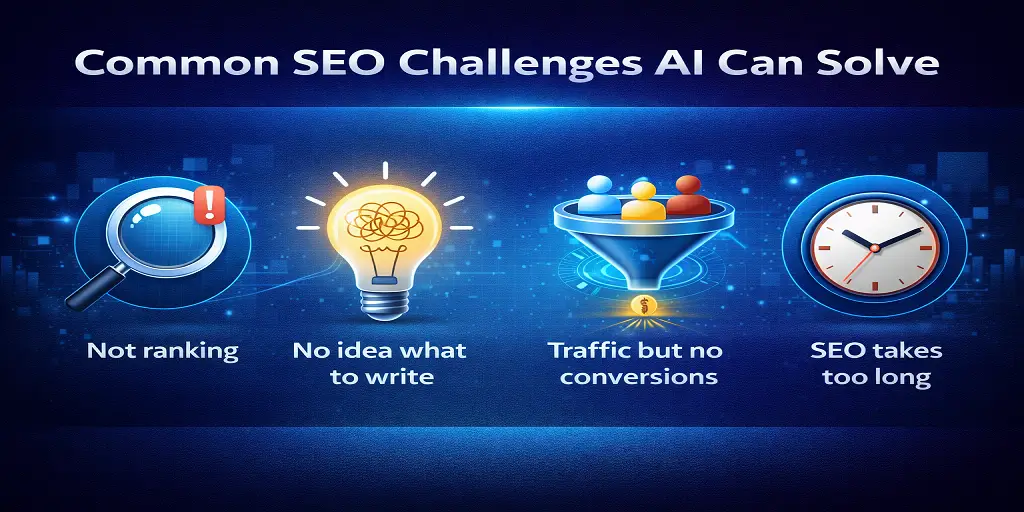
- When rankings don’t move, AI tools help you see why.
- When you don’t know what to write next, they surface gaps instead of guesses.
- When traffic shows up but conversions don’t, it points to structural and intent mismatches.
- When SEO feels endless, they help you prioritize rather than panic.
For small businesses, affiliates, and solo creators, that clarity is the advantage.
You’re not trying to outspend big brands.
You’re trying to out-think wasted effort.
SEO Is a System, Not a Tool Problem
One mistake almost everyone makes at the beginning is looking for one “all-in-one” AI SEO tool to fix everything.
That tool doesn’t exist.
SEO works as a system. Research feeds content. Content feeds authority. Authority feeds rankings. Rankings feed data. Data feeds better decisions.
AI fits into each stage differently.
You don’t need dozens of subscriptions.
You need the right type of tool at the right stage.
Once you understand that, everything gets simpler.
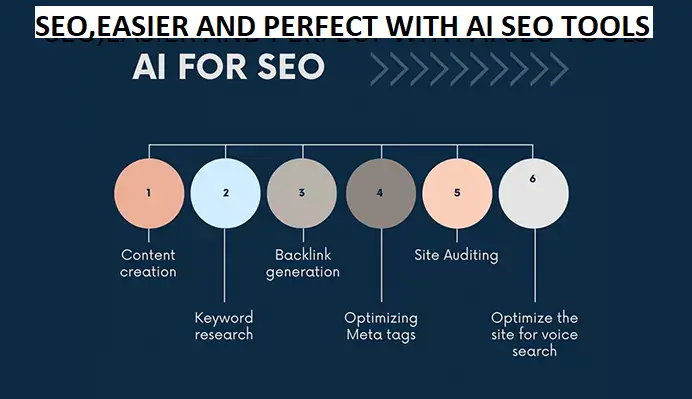
Keyword Research and Competitor Insight (Where SEO Actually Starts)
Most sites fail before they even publish.
They target overly competitive keywords, misunderstand intent, or blindly copy what larger sites are doing without asking why it works for them.
AI-powered keyword research changes that dynamic.
Instead of guessing, you see live SERP patterns. You see who’s ranking, how strong they really are, and where smaller sites can realistically compete.
Tools like Semrush and LowFruits use AI to surface opportunities that don’t appear obvious at first glance. Not just volume, but weakness.
That matters.
Because ranking isn’t about finding popular keywords.
It’s about finding the underserved ones.
This is usually the first place people invest money, for a reason. If keyword research is wrong, everything downstream suffers.
Content Creation and On-Page Optimization (Where Trust Is Built)
Content Creation and On-Page Optimization (Where Trust Is Built)
Publishing content that reads well but doesn’t rank is one of the most frustrating experiences in SEO.
It usually happens when content lacks depth, misses subtopics, or only partially answers the intent.
AI-driven content tools don’t write for you. They guide you.
They analyze what already ranks and highlight what those pages cover, how they’re structured, and what users expect to see. That guidance keeps you from publishing thin or incomplete pages.
Platforms like Frase and Surfer SEO act more like a strategist sitting next to you than a robot typing words.
Used correctly, they help you build topical authority, avoid keyword stuffing, and create content that feels complete.
This is where readers start trusting you.
And where affiliates start converting.
Technical SEO (Quietly Blocking or Unlocking Growth)
Technical SEO scares people because it feels invisible.
Slow pages, indexing issues, broken internal links—none of these scream for attention, but all of them quietly hold sites back.
AI SEO tools help by prioritizing impact.
Instead of dumping a long list of errors, they highlight what actually matters now. What’s blocking crawling? What’s a confusing structure? What’s hurting performance?
With tools like Rank Math, AI assists with internal linking, schema, and structural cleanup without requiring you to become a technical expert.
For small businesses, especially, this prevents silent failures.
Nothing is worse than doing everything right and still being invisible because of one fixable issue.
Link Building and Authority Signals (Doing Less, but Safer)
Backlinks still matter. That hasn’t changed.
What has changed is how easy it is to mess them up.
- Spammy links
- Over-optimized anchors
- Random outreach
can do more harm than good.
AI helps here by analyzing patterns instead of chasing volume.
AI SEO tools analyze:
- Competitor backlink profiles
- Anchor text distribution
- Other relevance signals.
That insight helps you build authority in a controlled, intentional way.
Instead of asking “How many links do I need?” you start asking “Which links actually help?”
That mindset protects you long term.
Local SEO (Fast Wins for the Right Businesses)
For local and service-based businesses, AI SEO tools can feel almost unfair—in a good way.
They help optimize business listings, align local keywords with real intent, and strengthen review and location signals.
For freelancers, agencies, and service providers, this often leads to faster visibility than content-heavy strategies.
Local SEO with AI isn’t about volume.
It’s about precision.
Local SEO + AI = faster visibility with less content.
User Experience(UX): Where Rankings and Revenue Meet
When people click your page and leave quickly, they send a clear signal to search engines:
This page didn’t help.
Modern AI-powered SEO tools analyze real engagement signals like scroll depth, content flow, and layout effectiveness—not to manipulate users, but to uncover friction points.
Small improvements here compound fast:
- Better readability,
- Clearer structure,
- Stronger calls to action.
When users stay longer and engage more, rankings improve naturally—and conversions rise at the same time.
That’s why modern SEO can’t ignore user experience.
Tracking Performance Without Drowning in Data
Most people track too much—and act on nothing. SEO shouldn’t feel emotional or overwhelming.
How AI helps:
AI SEO tools highlight:
- What’s improving
- What’s declining
- What needs action now
Instead of drowning in data, you focus on decisions.
Platforms connected to Google Search Console and Google Analytics help turn metrics into insights.
This is where SEO becomes predictable, not stressful.
Quick Reality Check (Why This Section Matters)
- You don’t need more content.
- You don’t need more tools.
- You don’t need more complexity.
- You need the right AI SEO tools at the right stage, clear priorities, and a workflow you can repeat without burning out.
- That’s how beginners gain visibility.
- That’s how small businesses build trust.
- That’s how affiliates turn traffic into revenue.
- Not faster hacks.
- Smarter systems.
Advanced AI SEO Tools: When “More” Stops Helping
By this point, most people start asking the wrong question.
They stop asking, “What problem am I trying to solve?”
And start asking, “Which advanced tool should I buy next?”
That’s usually where SEO gets noisy.
Advanced AI SEO tools aren’t powerful because they have more features.
They’re powerful because they reduce blind spots.
Used well, they make decisions clearer.
Used poorly, they add complexity without progress.
Advanced doesn’t mean complicated.
It means intentional.
Google’s Own AI Tools (Often Ignored, Always Useful)
Let’s start with the least exciting tools.
And also the most honest ones.
Google already uses AI to rank content. So it makes sense to use Google’s own tools to understand how your site is being interpreted.
The first place to look is :
Google Search Console:
It doesn’t guess. It reports reality.
You can see which pages actually get impressions, which queries hover just below page one, and where optimization effort is most likely to pay off. For beginners, this alone can prevent months of wasted work.
Then there’s:
Google Analytics.
This is where SEO stops being theoretical. You see how people behave after they land. Where they scroll. Where they hesitate. Where they leave.
Traffic without engagement is noise.
Engagement without direction is confusion.
Used together, these tools don’t do SEO for you. They tell you where AI SEO tools should focus next.
That’s leverage.
Google Gemini:
Some creators also experiment with Google Gemini. Carefully.
It can help explain technical issues in plain language, brainstorm angles, or simplify complex SEO concepts. But it should never be treated as an authority. Think of it as a junior assistant, not a decision-maker.
AI Writing Tools: Where Trust Is Either Built or Lost
This is where things get sensitive.
AI writing tools are powerful. And they’re also where most people damage their credibility without realizing it.
The mistake isn’t using AI to write.
The mistake is letting AI speak for you.
Tools like ChatGPT work best when they help you think, not when they replace thinking. They’re excellent for outlining, rephrasing awkward sections, expanding thin explanations, or clarifying complex ideas.
They’re terrible at lived experience, judgment calls, and persuasion.
That’s why the rule is simple:
AI helps you write faster.
Humans decide what’s worth saying.
When readers feel that difference, trust survives. When they don’t, it disappears quietly—and rankings follow.
All-in-One Platforms vs Specialist Tools (A Quiet Trade-Off)
Some AI SEO tools try to do everything.
Others do one thing exceptionally well.
Neither approach is wrong. The mistake is choosing based on features instead of workflow.
All-in-one platforms are useful for site-wide audits, keyword tracking, and competitor benchmarking. They give you a broad picture, which is helpful once you have momentum.
Specialist tools shine when you’re solving a specific problem: finding low-competition keywords, optimizing a money page, strengthening internal links, or cleaning technical debt.
For small businesses and affiliates, the goal isn’t more data.
It’s clearer next steps.
A smart strategy is boring, but effective: start with one core platform, then add one specialist tool only when a bottleneck appears.
That’s how costs stay low, and focus stays sharp.
How Different People Actually Use AI SEO Tools
AI SEO isn’t one-size-fits-all, and pretending it is causes frustration.
Bloggers and content creators often use AI to uncover underserved topics, build clusters, and refresh content that deserves a second chance.
Small businesses focus on local visibility, service pages, and conversion paths. Rankings matter, but leads matter more.
Affiliates and niche site owners validate keywords before publishing, optimize money pages carefully, and scale content without falling into thin-value traps.
Agencies and freelancers use AI to speed up audits, standardize workflows, and deliver consistent outcomes without burning out.
Different goals. Same principle.
AI works best when it supports a clear objective, not when it replaces one.
Advanced Doesn’t Mean Aggressive
Here’s a quiet truth about advanced SEO.
The sites that last aren’t the ones pushing hardest.
They’re the ones removing friction.
Advanced AI SEO tools help you see problems earlier, move with more confidence, and scale without chaos. Not because they’re smarter than you, but because they catch patterns humans miss when juggling too much.
This is where topical authority becomes practical. Less scrambling. Fewer reversals. Better compounding.
Section Takeaway (Why This Matters)
- Section Takeaway (The Thinking Shift)
- Advanced AI SEO tools don’t make you better at SEO by default.
- They make you better at decisions.
- If you already have judgment, they amplify it.
- If you don’t, they amplify mistakes.
- That’s why restraint matters as much as capability.
Challenges, Risks, and the Human Factor in AI SEO
AI SEO tools are powerful—but without careful judgment, they can quietly erode trust, authority, and long-term results.
That’s obvious. What’s less obvious is how easily AI can mislead you. The sites that succeed long term aren’t the ones using the most AI—they’re the ones who use it wisely and with oversight.
AI SEO isn’t magic—it’s a tool. Its value depends entirely on how wisely you use it.
The Hidden Risks of Using AI SEO Tools Without Human Oversight
The Hidden Danger: Most AI SEO mistakes don’t trigger a penalty—they fail slowly. You might rank faster, get clicks, and see traffic rise. But if your content lacks real insight, authority, or trust, that traffic won’t convert. Over time, your site stagnates. You end up chasing numbers instead of building something meaningful.
Skipping human checks may seem faster, but it can subtly erode trust, reduce credibility, and hurt engagement.
AI SEO tools can save time and make content creation faster—but without human judgment, they can cause hidden problems. At first, everything may look fine: your pages rank, traffic rises, and metrics seem strong. But beneath the surface, subtle issues quietly erode trust, authority, and engagement. AI often repeats what’s already online, misses context, or produces shallow content that doesn’t truly help readers.
Most of these mistakes don’t trigger penalties—they fail slowly, reducing conversions and limiting long-term growth. The sites that succeed aren’t the ones relying solely on AI—they’re the ones that pair AI efficiency with human insight, careful review, and real-world experience.
Ethical Challenges: Why Human Oversight Isn’t Optional
Let’s be honest. The biggest risk with AI SEO isn’t Google.
It’s the reader.
Publishing AI content without a human eye might be convenient, but it creates invisible erosion of trust. Readers notice when content feels hollow—even subconsciously.
Common mistakes include:
- Pushing out content without checking accuracy
- Over-optimizing for rankings rather than helping users
- Repeating what’s already online without new insight
- Scaling content before establishing authority
Google won’t punish AI itself. But it will reward sites that consistently help users. That’s where humans are non-negotiable.
Think of it this way:
AI helps you research, organize, and optimize.
Humans decide, explain, and persuade.
If your page doesn’t genuinely help someone make a decision, it won’t survive long—even if every metric looks perfect.
Short-Term Wins vs Long-Term Authority
Many creators fall for the “quick boost” trap.
AI tools can give fast insights, rank small pages quickly, or generate outlines in minutes. That feels like progress. And it is, temporarily.
The danger is treating those wins as proof of mastery.
Real authority grows slowly. It comes from repeated, careful decisions, human judgment, and consistently adding value that no AI alone could invent.
If you focus only on speed and scale, you risk creating a site full of decent content but no leadership. And leadership—not traffic—is what sustains long-term SEO.
Human + AI: The Safe Rule
Here’s the simple, repeatable rule we follow at TechLifeTV:
- Use AI to research, organize, and optimize.
- Use humans to interpret, explain, and persuade.
That combination lets you scale without losing credibility.
It’s also why small teams and beginners can compete with bigger brands. You don’t need more budget. You need better judgment.
Future Trends: Where Smart Creators Should Focus
SEO isn’t disappearing.
It’s evolving. And AI is accelerating that evolution.
What you’ll see over the next few years:
• Search is becoming more intent-driven. Exact-match keywords matter less. Coverage, context, and expertise matter more.
• Quick-answer engines and AI summaries reduce traffic for shallow content. Comparisons, tutorials, and case-driven insights will win.
• SEO, UX, and conversion optimization merge. It’s no longer just about ranking; it’s about trust, comprehension, and action.
For beginners, affiliates, and SMBs, the takeaway is simple: you don’t need to publish more. You need to choose the right tools, build an authority page by page, and keep humans in the loop.
Takeaway
AI won’t replace SEO professionals.
But SEO professionals who understand and use AI will replace those who don’t.
The winners will be:
- Clear thinkers
- Ethical optimizers
- User-first creators
AI SEO tools amplify what you already know. They don’t invent judgment.
At some point, almost everyone experimenting with AI SEO tools asks the same question: “Which ones actually matter?” With so many tools promising faster rankings and smarter optimization, it’s easy to feel overwhelmed. The questions below address the most common questions beginners and small-site owners want to know before choosing their tools.
Frequently Asked Questions About AI SEO Tools
People ask about AI and SEO all the time. Some are curious. Some are skeptical. And many are simply trying to figure out which tools are actually worth their time. Instead of long explanations, here are clear, straightforward answers based on how these tools are commonly used in real SEO workflows.
After testing different AI SEO tools while building content sites, a few questions keep coming up again and again. Here are straightforward answers to help you decide which tools are actually useful.
Which AI tool is best for SEO?
There isn’t one single “best” AI SEO tool. It really depends on what you’re trying to do. For keyword research, tools like Semrush or LowFruits are very effective. If your focus is improving content quality, Frase or Surfer SEO are strong choices. For WordPress technical SEO, Rank Math is a popular and reliable option.
Can you really do SEO with AI?
Yes, AI can handle many parts of SEO much faster than manual work. It can help with keyword research, content optimization, and performance tracking. But it still needs human guidance. The best results usually come when AI handles the data and humans handle the strategy and final editing.
Is ChatGPT good for SEO?
It can be very helpful, especially for research, outlines, and rewriting sections of content. Many writers use it when they need ideas or want to improve clarity. But publishing unedited AI text isn’t a good strategy. Adding personal insights, examples, and expertise makes the content much stronger.
What are some of the most useful AI SEO tools right now?
Several tools are widely used by marketers and bloggers. Frase is known for content optimization. Surfer SEO focuses on on-page improvements. Semrush provides deep keyword and competitor research. Rank Math helps manage technical SEO on WordPress sites. LowFruits is often used to find low-competition keyword opportunities.
Which tools should you use to track SEO performance?
Before adding advanced tools, start with the basics. Google Analytics shows how visitors interact with your site, while Google Search Console shows how your pages perform in search results. These two tools already provide a large amount of useful data for tracking SEO progress.
Are AI SEO tools actually worth the investment?
For many website owners, they are. Good tools can save hours of research and reveal opportunities that are easy to miss manually. When used strategically, platforms like Frase, Surfer, Semrush, and Rank Math can help improve rankings, streamline workflow, and make SEO decisions more data-driven.
Conclusion: Embrace AI Without Losing Yourself
If you’ve made it this far, here’s the truth: AI SEO tools are powerful—but they’re only as effective as the person using them.
They can accelerate research, optimize content, and uncover opportunities that would take hours to identify manually. But they can’t replace human judgment, real experience, or the trust you build with your audience.
That’s why the creators who succeed long term don’t rely on AI alone—they use it as support while staying in control of the strategy and message.
Key Takeaways
Let’s recap what really matters:
- AI SEO tools amplify strategy. They don’t invent it.
- Start with clarity. Know your goals before buying or testing every tool.
- Build authority gradually, page by page. Quick wins are fine—but durable growth comes from consistency and judgment.
- Human oversight is non-negotiable. Readers notice when content is hollow, and Google rewards genuine value.
- Beginners, small businesses, and affiliates can compete with larger brands by focusing on smart systems, not just output.
Actionable Next Steps
Start small. One tool per workflow stage is enough. Don’t chase every shiny new platform.
• Research: Semrush or LowFruits—find realistic, low-competition keywords that match intent.
• Content: Frase or Surfer SEO—analyze top-ranking pages, build topical authority, avoid thin content.
• Technical: Rank Math—prioritize fixes that actually affect crawling and indexing.
• Tracking: Google Search Console and Google Analytics—measure engagement, uncover friction, and focus your next move.
Pick one stage first. Learn it well. Then add the next. Knowledge compounds. Tools don’t.
Final Thoughts: AI SEO Tools Are Assistants, Not Shortcuts
AI won’t magically rank your site. It won’t replace careful thinking, ethical judgment, or audience empathy.
But when used intelligently, AI makes the process:
- Faster
- Cleaner
- Less stressful
- More predictable
When combined with human judgment, experience, and ethical intent, AI-powered SEO tools are among the most practical advantages for smaller creators and businesses today.
That’s how small teams, solo creators, and low-budget affiliates can finally compete with bigger players.
The opportunity is real. The edge comes from restraint, judgment, and the willingness to combine human insight with AI efficiency.
Start Using AI SEO Tools the Smart Way
AI won’t replace your judgment—but it can supercharge your workflow. The secret to getting ahead isn’t doing more—it’s doing smarter.
“Let AI Be Your Co-Pilot, Not Your Driver”
- Frase AI content outline and optimization tool – plan, write, and optimize faster
- Surfer SEO content optimization platform – boost on-page performance with data-driven insights
- Rank Math SEO plugin for WordPress – streamline technical SEO in one plugin
- LowFruits low-competition keyword finder – uncover easy-ranking keywords effortlessly
Start small. Scale smart. Focus on clarity, not chaos.
Every tool here is designed to save you time, reduce stress, and help you rank smarter—not harder.