SEO Workflow Process 2026: The Complete Beginner-to-Advanced Guide

Why Most SEO Content Fails (And How to Fix It)
You hit publish… and nothing happens.
No rankings. No traffic. Just another article sitting quietly on your site.
If that feels familiar, you’re not alone.
Most beginners don’t struggle because they lack effort—they struggle because they don’t have a clear SEO workflow process.
Table of Contents
After testing different strategies and publishing dozens of articles, one thing became obvious:
pages don’t rank because of random tactics—they rank because of a structured, repeatable process.
Without a system, SEO feels frustrating and unpredictable. But once you follow a proven workflow, everything starts to click.
You stop guessing what might work…
and start following a clear path—from finding low-competition keywords to optimizing content based on real data.
And that’s when results begin to change.
Traffic becomes consistent. Rankings become predictable.
Here’s what most people get wrong:
You don’t need expensive tools or advanced skills to make this work.
You just need the right process—applied consistently.
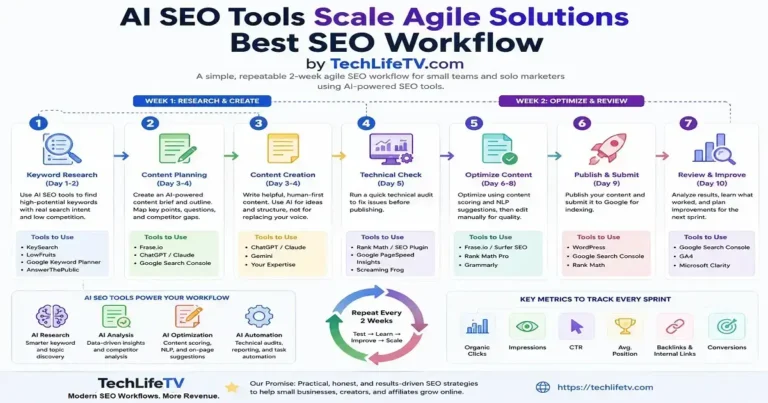
In this guide, you’ll learn a simple, beginner-friendly SEO workflow you can start using today to create content that actually ranks. For proper implication of the SEO Workflow process, AI SEO Tools may help you.
Because the difference between pages that rank and those that don’t isn’t luck.
It’s the system behind them.
What Is the SEO Workflow Process
An SEO workflow process is a step-by-step method used to plan, create, optimize, publish, and improve content so it can rank on search engines and attract organic traffic.
Think of it like a roadmap.
Without it, you’re guessing what to do next.
With it, every step has a clear purpose.
Why a Structured SEO Process Matters (And What You Can Expect)
When you have a clear SEO workflow, things just start to feel easier.
Instead of bouncing between random tasks and hoping something works, you follow a path that actually makes sense. You know what to do next—and more importantly, why you’re doing it.
That shift changes everything.
What Changes When You Follow a Workflow
- You stop wasting time on busywork that doesn’t lead anywhere
- You create content that matches what people are actually searching for
- You start building real authority in your niche
- And your content has a much better chance of ranking
Over time, those small wins begin to stack up.
The Results You Can Expect Over Time
- Your rankings improve
- More people start finding your site
- Traffic becomes more consistent
- And your growth feels steady, not random
Here’s the simple truth: SEO isn’t about doing more.
It’s about doing the right things—in the right order.
It’s about doing the right things in the right order.
What This Process Actually Does for You
Think of this as a system that removes confusion.
It helps you:
How It Simplifies Your SEO Process
- Know exactly what to do first
- Focus on keywords you can realistically rank for
- Create content that matches what people are searching for
- Improve performance over time instead of starting from scratch
In simple terms:
You stop creating “hope content”… and start building content that’s designed to rank.
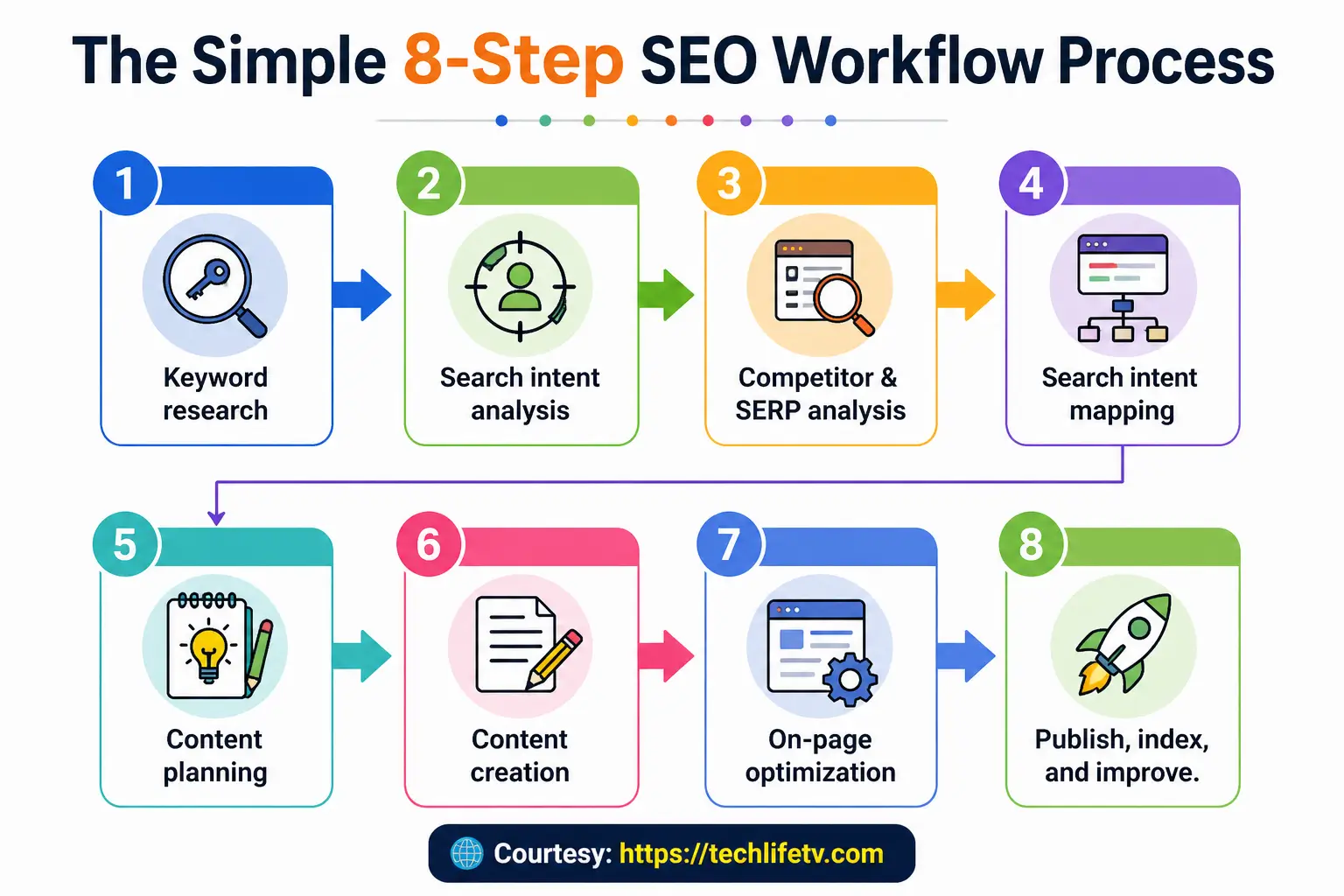
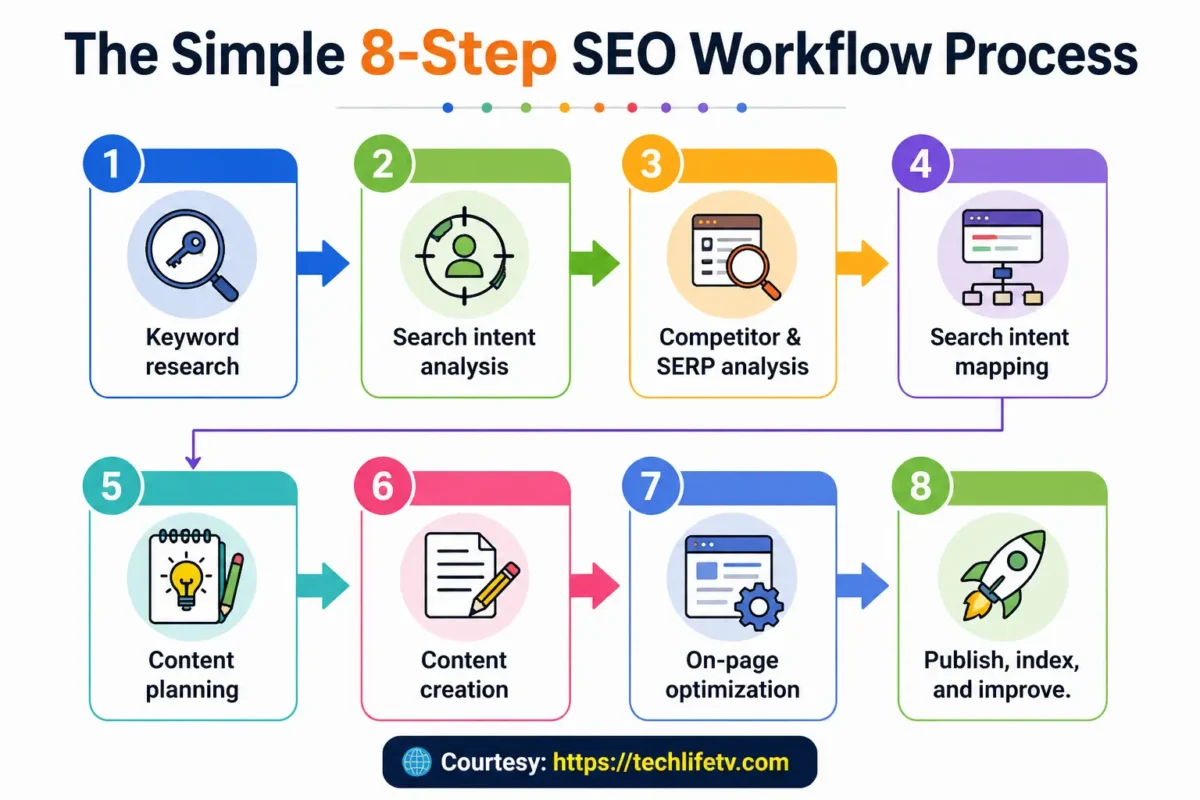
The Simple 8-Step SEO Workflow
Here’s the full process:
- Keyword research
- Search intent analysis
- Competitor & SERP analysis
- Search intent mapping
- Content planning
- Content creation
- On-page optimization
- Publish, index, and improve
Don’t worry—each step is simple once you understand how they connect.
The goal isn’t perfection.
It’s consistency.
Step 1: Keyword Research (Find Ranking Opportunities)
Everything starts here.
Choose the wrong keyword, and even great content struggles.
Choose the right one, and even a simple article can bring steady traffic.
Find Low-Competition Keywords
As a beginner, your goal isn’t to compete with big sites—it’s to find opportunities.
Focus on:
- Long-tail keywords (3–5 words)
- Lower competition terms
- Clear, specific intent
Avoid broad keywords like:
- “SEO tools.”
- “Best AI SEO tools for beginners.”
In many beginner cases, targeting long-tail keywords alone is enough to start seeing early rankings.
Validate Keyword Potential
Before you commit, take a minute to check the search results.
Look for:
- Weak or outdated content
- Smaller websites ranking
- Gaps you can improve
If you see those signs, you’ve likely found a good opportunity.
This simple check can save you weeks—or even months—of wasted effort.
Choose One Primary Keyword
Keep your focus tight.
For each page:
- 1 primary keyword
- 2–3 closely related variations
Make sure they all match the same intent.
This helps search engines clearly understand your content.
Step 2: Search Intent Analysis (Understand User Goals)
Now comes a key question:
Why is someone searching this keyword?
What Is Search Intent
Search intent is the reason behind a search.
It usually falls into three categories:
- Informational (learning something)
- Commercial (comparing options)
- Transactional (ready to act)
Identify Buyer Intent Keywords
If your goal is traffic that converts, focus on:
- “best”
- “review”
- “vs”
- “tools”
These signals often indicate decision-making intent.
Why Intent Matters for Rankings
Google’s goal is simple: to show the most relevant result.
When your content matches intent:
- You’re more likely to rank
- Users stay longer
- Engagement improves
Even well-written content can fail if it doesn’t match intent.
Step 3: Competitor & SERP Analysis (See What Works)
Up to this point, you’ve chosen a keyword and understood the intent.
Now it’s time to study what’s already working—and do it better.
Analyze Top Ranking Pages
Search your keyword and observe:
- What type of content is ranking?
- How detailed is it?
- How is it structured?
Identify Content Gaps
Look closely for:
- Missing topics
- Weak explanations
- Outdated sections
These gaps are your opportunity.
Extract Winning Patterns
Pay attention to:
- Headings and structure
- Formatting style
- Content flow
You’re not copying—you’re learning what works and improving on it.
Step 4: Search Intent Mapping (Match Content Format)
This is where many beginners struggle.
They write good content—but in the wrong format.
Match Content Type to SERP
If Google shows:
- Lists → write a list
- Guides → write a guide
- Reviews → write a review
Align with what’s already working.
Align Structure With Google Results
You don’t need to reinvent the wheel.
Follow proven structures—then make yours clearer and more helpful.
Avoid Intent Mismatch
Trying to rank a guide when Google prefers lists?
That’s an uphill battle.
Simple rule: align with the system, don’t fight it.
Step 5: Content Planning (Build a Strong Outline)
Before writing, take a step back and plan.
This is where structure turns into clarity.
Create a Clear Content Structure
Use:
- H1 for the main topic
- H2 for sections
- H3 for details
A clean structure improves both readability and SEO.
Cover All Important Subtopics
Ask yourself:
- What does the reader still need to know?
- What are competitors missing?
Filling these gaps builds depth—and depth builds rankings.
Plan Internal Linking Strategy
Think beyond one page.
Connect your content:
- Link related articles
- Support your main topic
- Strengthen your site’s overall relevance
Over time, this builds real topical authority.
Step 6: Content Creation (Write for Humans First)
Now you start writing—but with a clear purpose.
Write Clear, Helpful Content
At this stage, your job is simple:
Help the reader solve one clear problem—better than anyone else.
Keep it simple. Keep it useful.
Use Keywords Naturally
Include your keyword in:
- Title
- Headings
- Introduction
But don’t force it.
Natural usage is more effective than repetition.
Add Experience Signals
This is where your content becomes more than just “information.”
Add:
- Simple explanations
- Real-world examples
- Practical insights
Even small touches like this can noticeably improve engagement and trust.
Step 7: On-Page Optimization (Make It SEO-Friendly)
Now refine what you’ve created.
Optimize Meta Tags
Focus on:
- A clear, keyword-focused title
- A compelling meta description
This improves your chances of getting clicks.
Improve Readability & UX
Make your content easy to read:
- Short paragraphs
- Bullet points
- Clean formatting
Better readability often leads to better engagement signals.
Apply Technical Basics
Don’t skip these:
- Internal links
- Image alt text
- Clean structure
Small improvements here can make a noticeable difference.
Step 8: Publish, Index & Improve (Growth Loop)
Now your content goes live—but the process doesn’t stop here.
Publish With Clean URL Structure
Keep URLs simple and readable with the primary keyword.
Submit to Google Search Console
Request indexing so your page gets discovered faster.
Track Performance Metrics
Pay attention to:
- Rankings
- Traffic
- CTR
This shows what’s working—and what needs improvement.
Update & Improve Content
This is where long-term growth happens.
- Add new insights
- Improve weak sections
- Keep content fresh
Many pages start ranking only after updates—not the first publish.
Real Example of an SEO Workflow in Action (Data-Driven Case Study)
“I’ve seen this pattern repeat across multiple low-competition keywords.”
Let’s look at a real example—no theory, just how this works in practice.
Let me show you how this actually plays out in the real world, not just in theory.
On March 31, 2026, I was digging through SEMrush data, looking for something realistic. Not a “dream keyword,” something you could actually rank for without waiting a year.
The Opportunity
- Keyword: best SEO tools for beginners
- Intent: Commercial (people comparing tools before choosing)
- Difficulty: (KD): 25, Low–moderate (realistic for smaller sites)
- Search Demand: ~1,000+ monthly searches globally
- Trend: Steady upward growth
- CPC: $5.14
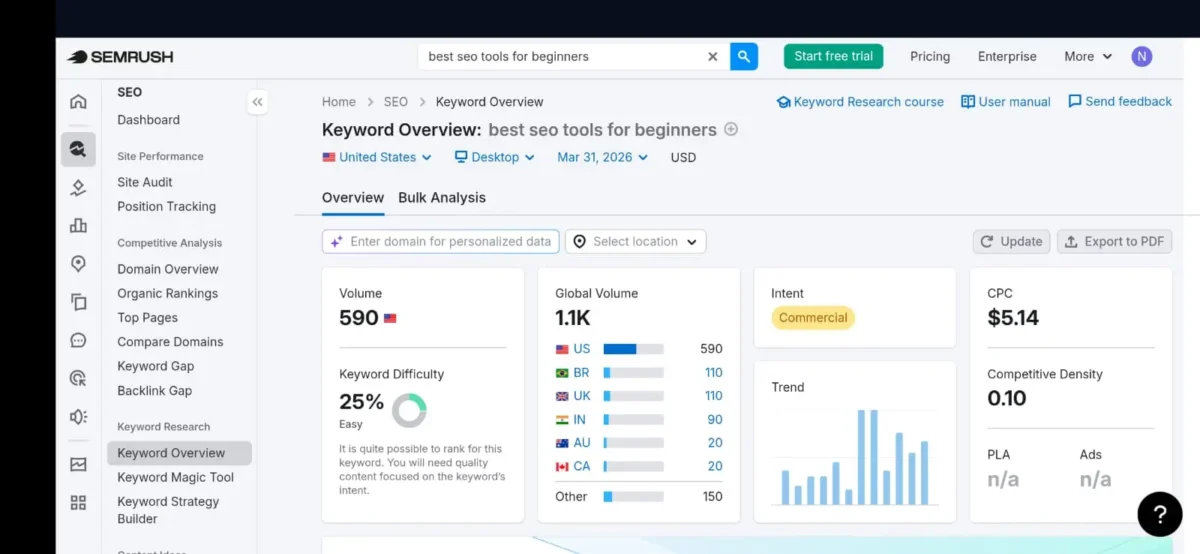
This isn’t a “viral” keyword. It’s a practical opportunity—the kind that actually drives results.
Why This Worked (Backed by Data)
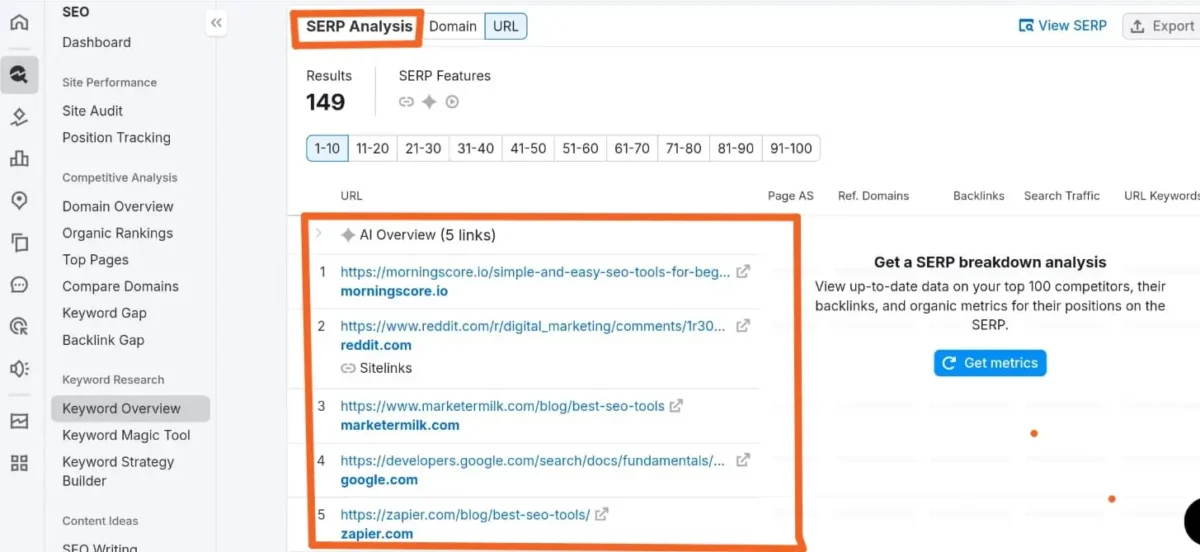
- Top-ranking pages were mostly list-style guides + comparisons
- Several results came from non-authority sites
- Content quality was good—but not exceptional (clear room to improve)
That’s the signal you’re looking for:
Google is ranking content you can realistically compete with.
The Approach (Aligned With Data)
Instead of guessing, the content followed what the data showed:
- Matched the exact format already ranking (list + comparisons)
- Targeted beginner-friendly language (based on audience intent)
- Focused on helping users choose, not just explaining tools
- Used clean structure (short paragraphs, bullet points, comparisons)
Every decision was based on:
“What’s already working—and how can I do it better?”
The Outcome Insight
After publishing and indexing:
- The page started getting impressions within weeks
- Rankings improved gradually with small content updates
- CTR increased after refining the title and meta description
No spike. No shortcut. Just steady, trackable growth.
What This Teaches You
- Data beats guessing—always validate before you write
- You don’t need high-volume keywords—just the right ones
- Ranking content isn’t about tricks—it’s about alignment + consistency
Bottom line:
When you follow a structured, data-driven SEO workflow, results stop feeling random.
They become repeatable.
Conclusion: Master the SEO Workflow Process (and Results Follow)
Most beginners don’t struggle because SEO is complicated.
They struggle because they don’t follow a clear SEO workflow process.
Once you do, things start to click.
You stop guessing what might work…
and start building content with a clear purpose, aligned with how search actually works.
At its core, the process is simple:
- Choose the right keyword
- Match the search intent
- Plan before you write
- Optimize with purpose
- Track performance and improve
The difference isn’t complexity—it’s consistency.
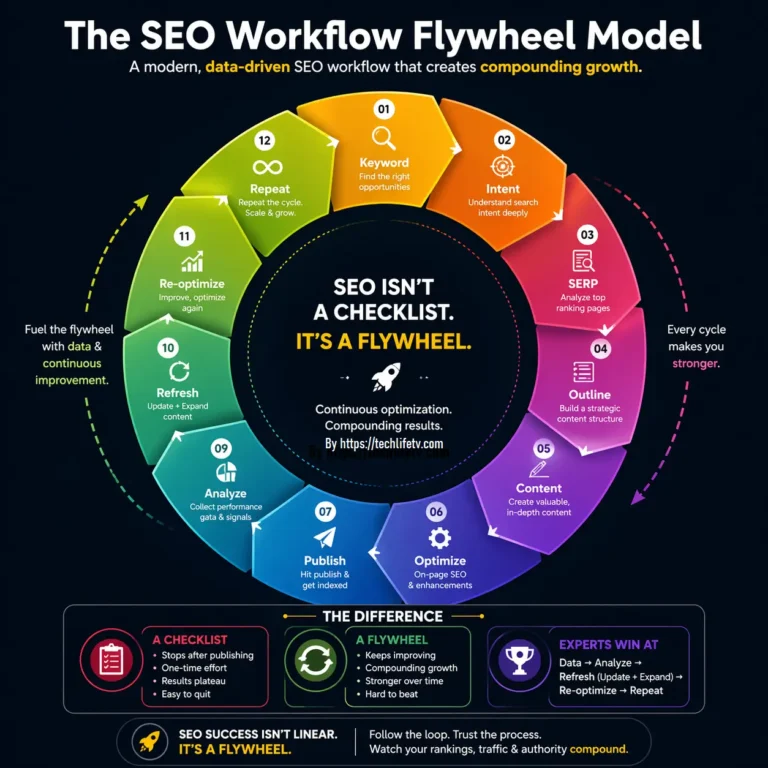
SEO isn’t about publishing one perfect article. It’s about applying the right process over and over until your results compound.
Take Action: Put This SEO Workflow Into Practice
Don’t just read this—apply it.
Start today:
Start With One Keyword
- Pick one low-competition keyword. Try LowFruits to find keywords you can actually rank for in minutes.
- Analyze what searchers actually want
- Create a simple, focused outline. Build your content brief and outline before you write a single word with Frase io
- Write and publish your content
Then do what most people never do:
Go back and improve it.
Improve What You Publish
Update weak sections.
Add clarity and depth.
Refine based on real data.
That’s where real rankings are built.
Stay Consistent
Start with one page.
Stay consistent.
That’s how you turn a simple SEO workflow process into long-term organic traffic.
FAQs for SEO Workflow Process
What is the workflow of SEO?
An SEO workflow is a structured process that includes keyword research, content creation, optimization, publishing, and performance tracking to improve rankings and organic traffic.
How does SEO work step by step?
SEO works through a sequence: keyword research, search intent analysis, competitor analysis, content planning, content creation, optimization, publishing, and ongoing improvement.
What are the 8 stages of an SEO workflow process?
The 8 stages are keyword research, search intent analysis, competitor analysis, search intent mapping, content planning, content creation, on-page optimization, and publishing with tracking and improvement.
Is SEO dead or evolving in 2026?
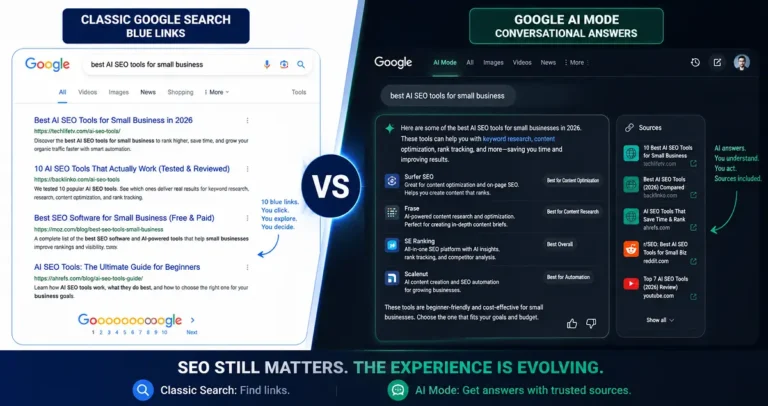
SEO is evolving. Modern SEO focuses on helpful content, search intent, and user experience, especially with the rise of AI-driven search systems.
How has the technical SEO workflow changed with AI?
AI has made technical SEO faster by helping identify issues, automate audits, and suggest improvements. However, strategy and decision-making still require human input.
What are the top AI tools for SEO workflow processes?
Common tools include keyword research platforms, content optimization tools, and technical audit tools. The key is using them to support your workflow, not replace it.
Can I check my blog’s SEO?
Yes. You can monitor performance using tools like Google Search Console and analytics platforms, focusing on rankings, traffic, and engagement.
Final Thought
In today’s SEO landscape, success doesn’t come from doing more.
It comes from consistently following a better process.
And now, you have one.